The Remarkable, Haunted History of Georgetown’s Halcyon House
Predating the founding of Washington, D.C., by nearly 40 years, Georgetown is no stranger to ghost stories. These local legends include a headless man that haunts the K Street Bridge, a phantom stagecoach that once drowned in Rock Creek, and the spirit of a Revolutionary War drummer boy who “can be heard beating out a macabre rat-a-tat-tat” on stormy nights. 1
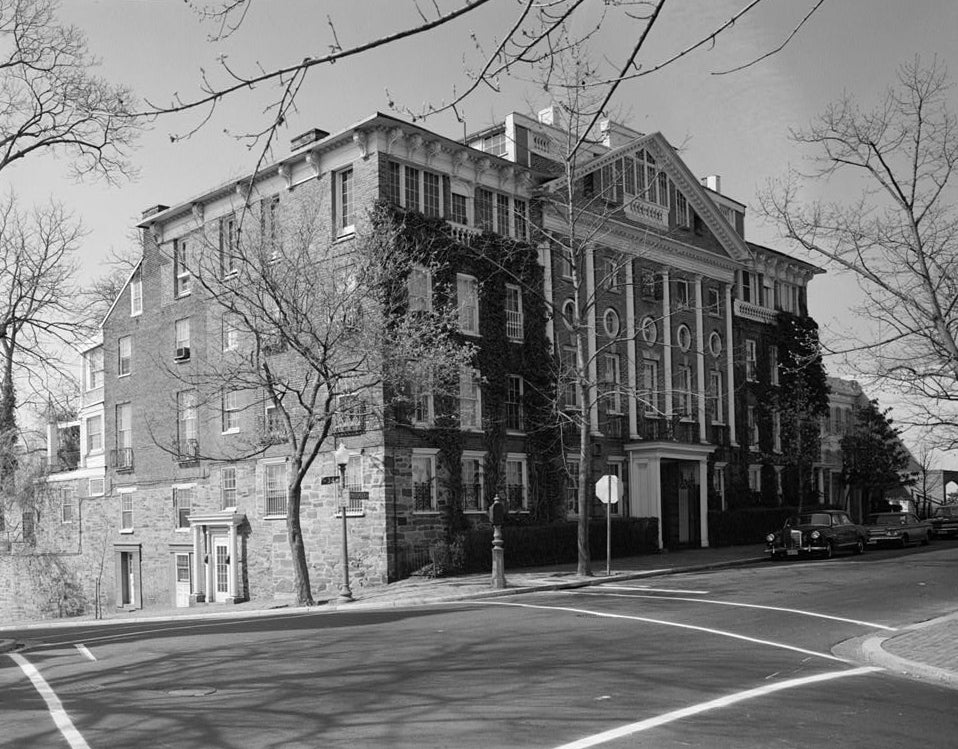
One of the neighborhood’s most fascinating—and, allegedly, spookiest—properties is Halcyon House, a 1787 Georgian-style mansion originally built for Benjamin Stoddert, the first Secretary of the Navy and a confidant of George Washington’s. 2 From 1900 to 1938 Halcyon was owned by Albert Adsit Clemons, an eccentric antique collector who used his wealth to carry out a series of bizarre renovations to the historic home. 3
Clemons reportedly believed that by constantly adding to the house he could artificially extend his own life. 4 With the help of a carpenter, who for many years was Halcyon’s only other resident, Clemons created “an odd mixture of beauty and horrors,” according to one Evening Star report. 5 Staircases that led to nowhere, dozens of tiny rooms (some of which could only fit a single piece of furniture), and doors that opened onto blank walls were among the many unusual features added during this time. 6
Delaying Clemons’ death may not have been the only purpose of the additions. Jenn Lupu, an Assistant Professor of Anthropology at Rhodes College in Memphis, Tennessee, is conducting research on archaeological materials excavated from Halcyon in the 1980s and says evidence points to the fact that the house served as a queer community space under Clemons’ ownership.
Clemons had been involved in the D.C. theater scene for years, including cross-dressing productions, and as part of the renovations built a huge two-story theater—complete with stages, balconies, lofts, and a secret entrance—inside the expanded house “as if prepared for some elaborate theatrical performance.” 7 Even though Georgetown already had regular trash collection at the time, Lupu found that women’s luxury items like corset clips, stockings, and garters had been deliberately buried in Halcyon’s backyard. 8
“That all leads to this likelihood that there is a queer theater party scene,” Lupu said. 9 “Was Albert a gay man who did drag? Was Albert a trans woman who wasn't able to live openly? Would Albert identify as non-binary? These labels didn't exist back then, but Albert is showing some sort of involvement with queer and drag and cross-dressing performances in D.C. and creating a space like that in the house.” 10
Long before Clemons’ acquired the home, Halcyon played a prominent role in the formation of D.C. itself. Acting on behalf of then President George Washington, Halcyon’s original owner Stoddert helped purchase land for what would soon become the federal district. 11
Stoddert, who was born in Charles County, Maryland, in 1751, primarily lived at the Bostwick estate in Bladensburg with his wife Rebecca Lowndes but, after becoming a successful merchant in Georgetown, he dreamed of constructing a grand new house “after the manner of some of the elegant homes I have seen in Philadelphia” in the bustling tobacco port. 12 The result was the Halcyon House, a stately red-brick manor perched on a bluff overlooking the Potomac at today’s intersection of Prospect and 34th Street NW.
The mansion and its two side wings originally faced south to take advantage of the grand view of the river and its terraced boxwood gardens, which were designed by D.C. city planner Pierre Charles L'Enfant. 13 “When the moon came up, the place was so wondrously beautiful you almost felt like you were dreaming or living in a story book,” wrote Washington Herald correspondent E.C. Drum-Hunt after a visit to the gardens in 1919. 14
Stoddert was one of the 19 “original proprietors” who signed the agreement creating the “Ten Mile Square” capital city and served as a Secretary of the Navy during the Adams Administration, spurring the construction of some of the nation’s first warships and navy yards during the Quasi-War with France. 15 Halcyon quickly became a center of D.C.’s fledgling social scene as the Stodderts entertained prominent officials and guests, including future First Lady Dolley Madison. 16
But the happy times didn’t last long. Rebecca died in 1802 and Stoddert was forced to mortgage the house and retreat to Bladensburg, where he died in 1813. 17 Following Stoddert’s death, his daughter and son-in-law Elizabeth and Thomas Ewell remained in Georgetown, where the couple’s son and future Confederate general Richard S. Ewell was born in 1817. 18
Over the next 80 years Halcyon bounced between a succession of different owners, including John Lawrence Kidwell, a D.C. pharmacy owner known as the “Quinine King” for selling huge amounts of the drug to the Union Army during the Civil War. 19 Kidwell, who also owned a tract of swampland known as “Kidwell’s Meadows” that would eventually become Potomac Park and parts of the National Mall, was an enslaver like the Stodderts before him. 20
Under the D.C. Compensated Emancipation Act in 1862, Kidwell filed a petition seeking payment for emancipating three enslaved individuals—James Somerville, his daughter Mary Somerville, and Sarah Brooks—who lived at the house. 21 Kidwell noted in the petition that the 24-year-old James was a “good gardener and florist,” the man responsible for maintaining Halcyon’s beauty. 22
After Kidwell died his daughter eventually sold the property to Albert Clemons in 1900. 23 Contrary to persisting rumors, Clemons was not the nephew of author Mark Twain aka Samuel Clemens. 24 Per Census data, he married Elizabeth White in 1912 when they were both in their 40s and never had children. 25
Although they attended social functions together, the couple appeared to largely live separately, with newspapers reporting at various points that White resided at a New Hampshire Avenue home while Clemons remained at Halcyon. 26 One Washington Times-Herald article claimed after Clemons’ death that he had received “plenty of money” from White “on condition that he stay away from her.” 27 In his will Clemons apparently left her only “his cane and his affection.” 28 All these signs point to a potential lavender marriage, according to Lupu.
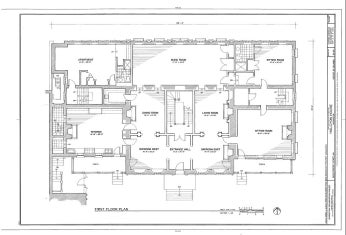
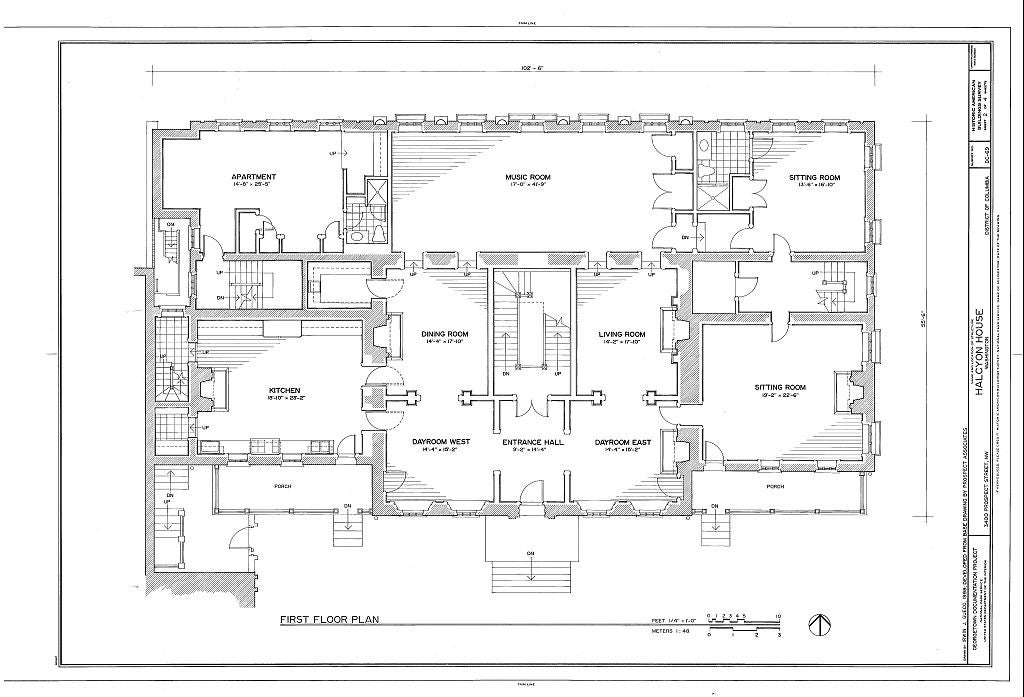
Whatever the case, Clemons and his carpenter got to work turning Halcyon into something of a Frankenstein's monster of architectural design. Along with the false doorways, closets, and stairs to nowhere, they expanded the north half of the house with a series of apartments, the theater, and an “enormous unfinished room constructed largely from architectural members from a demolished church.” 29
While later newspaper articles would claim he padlocked the house and “denied admission to all” for years, Clemons still seems to have held major events at Halcyon, at least in the early days of his marriage to White. 30 In May 1919 the couple hosted a series of benefit performances of the Japanese play “The Sun Goddess.” 31 Clemons directed the production, which “brought out a fashionable audience,” according to The Washington Times, and “was one of the most picturesque [events] given in Washington this season,” due to its setting on Halcyon’s terraced garden, which also had an outdoor theater. 32
“From the moment you pass the threshold of the house, you are charmed,” wrote the Herald journalist Hunt, who attended one of the performances. 33 “The house has a delightfully musty smell, just enough to make a flood of thoughts of the generations who have lived there and the years that have come and gone since the house was erected rush into your mind [...] There are so many unexpected nooks and corners that just delight your heart, and the mantelpieces are remarkably good.”
As the years went by, Clemons’ decorations became increasingly unusual. He tried putting statues of wooden angels on the roof but “when a high wind came along and they seemed about to fly away” a building inspector insisted they be taken down. 34 The house’s many antiques included a cigar store Indian and a series of inward-facing busts he placed in the windows. 35 He moved two sarcophagi, complete with mummies, into the yard, “memorials, he once explained, to his lost youth and his lost figure,” The Evening Star reported. 36
When Clemons did finally die in 1938, his will stipulated that “his heart be pierced to insure that he was dead”—one last superstition. 37 The house sat vacant for several years before being bought by Mr. and Mrs. Frederick A. Sterling, the former U.S. Ambassador to Sweden, in 1942. 38
The Sterlings set about restoring the house but told the Times-Herald they occasionally heard odd noises coming from Halcyon’s false passageways, despite never finding anyone in them. 39 In the years since, visitors have reported other supernatural phenomena, including the ghosts of Stoddert and runaway slaves and strange lights emanating from the house. 40
Since the 1960s, Halcyon has been used as Georgetown University dorms, a nonprofit headquarters, and most recently was purchased by Washington Commanders owner Josh Harris earlier this year for $28 Million, the most expensive price tag for a house in D.C. history. 41
In spite of Halcyon’s many uses and inhabitants over its long history, the historic plaque on the building’s exterior only mentions Benjamin Stoddert. Lupu’s research is conducted in partnership with the D.C. Historic Preservation Office, which will continue to house and steward the Halcyon artifact collection, making it available to future researchers upon request. She’s also working on several articles and a website, among other projects, about Halcyon’s past, including its queer history.
“It's so telling about American history that [Halcyon] is on the National Register of Historic Places, but the local knowledge of the house and what's written on the plaque is only about Benjamin Stoddert,” Lupu said. 42 “Everyone later has had such more interesting and quirky lives, and that history is totally lost.” 43
Footnotes
- 1
Will Vitka, “Haunted DC: Georgetown’s phantoms,” WTOP News, October 19, 2018; DuBarry Campau, “Ghosts of Old Georgetown: Inside Halcyon House, With Its Trick Doors, False Stairs, and Beauty,” Washington Times-Herald, March 14, 1943.
- 2
“National Register of Historic Places Inventory - Nomination Form: Halcyon House,” National Park Service, March 31, 1971.
- 3
Jennifer Anne Mitchell, “Archaeologist completes long-stalled excavation at 1787 mansion in Georgetown,” The DC Line, September 6, 2018.
- 4
“Halcyon House: Halcyon House's history dates back to the Revolutionary War, beginning with its builder, Benjamin Stoddert.,” DC Historic Sites, accessed October 24, 2026.
- 5
Margaret Germound, “Capital Silhouette: Home of First Secretary of Navy Nearing Completion of Restoration,” The Evening Star (Washington, D.C.), May 4, 1947.
- 6
DuBarry Campau, “Ghosts of Old Georgetown: Inside Halcyon House, With Its Trick Doors, False Stairs, and Beauty,” Washington Times-Herald, March 14, 1943.
- 7
DuBarry Campau, “Ghosts of Old Georgetown: Inside Halcyon House, With Its Trick Doors, False Stairs, and Beauty,” Washington Times-Herald, March 14, 1943.
- 8
Jennifer Anne Mitchell, “Archaeologist completes long-stalled excavation at 1787 mansion in Georgetown,” The DC Line, September 6, 2018.
- 9
Jenn Lupu, interview by author, October 14, 2026.
- 10
Jenn Lupu, interview by author, October 14, 2026.
- 11
“Halcyon House: Halcyon House's history dates back to the Revolutionary War, beginning with its builder, Benjamin Stoddert.,” DC Historic Sites, accessed October 24, 2026.
- 12
Will Vitka, “Haunted DC: Georgetown’s phantoms,” WTOP News, October 19, 2018; George B. Porter, “House Stays in Cabinet: Beall’s Pleasure Built by Stoddert Owned by M’Adoo’s Daughter.,” The Evening Star (Washington, D.C.), June 16, 1935.
- 13
Barbara Gamarekian, “HOUSE PROUD; 200 Years of House, 17 Years of Renovation,” The New York Times, July 27, 1995.
- 14
E.C. Drum-Hunt, “Society,” The Washington Herald, May 18, 1919.
- 15
“National Register of Historic Places Inventory - Nomination Form: Halcyon House,” National Park Service, March 31, 1971.
- 16
Barbara Gamarekian, “HOUSE PROUD; 200 Years of House, 17 Years of Renovation,” The New York Times, July 27, 1995.
- 17
“National Register of Historic Places Inventory - Nomination Form: Bostwick,” Bostwick House, September 16, 1974.
- 18
“Richard S. Ewell,” American Battlefield Trust.
- 19
George B. Griffenhagen, “American Institute of Pharmacy,” 2009.
- 20
George B. Griffenhagen, “American Institute of Pharmacy,” 2009.
- 21
“John L. Kidwell Petition,” filed May 26, 1862 (courtesy of Jenn Lupu).
- 22
“John L. Kidwell Petition,” filed May 26, 1862 (courtesy of Jenn Lupu).
- 23
E.C. Drum-Hunt, “Society,” The Washington Herald, May 18, 1919.
- 24
Will Vitka, “Haunted DC: Georgetown’s phantoms,” WTOP News, October 19, 2018.
- 25
Benjamin Zender and Jennifer Lupu (Forthcoming), “Corset Clips and Clam Shells: Forging Queer Community With Archival Trash,” American Anthropologist, 3.
- 26
“Society,” The Evening Star (Washington, D.C.), February 12, 1924.
- 27
Will Vitka, “Haunted DC: Georgetown’s phantoms,” WTOP News, October 19, 2018.
- 28
DuBarry Campau, “Ghosts of Old Georgetown: Inside Halcyon House, With Its Trick Doors, False Stairs, and Beauty,” Washington Times-Herald, March 14, 1943.
- 29
“National Register of Historic Places Inventory - Nomination Form: Halcyon House,” National Park Service, March 31, 1971.
- 30
Blair Bolles, “Clemons’ Will Recalls Tales of Eccentric: Owner of Old Stoddert Mansion in Georgetown Directed That Heart Be Pierced to Insure Death,” The Evening Star (Washington, D.C.), March 23, 1938.
- 31
See “Happenings in Society: Distinguished Japanese Visitor Arrives—Mrs. Dimock Entertains for Spanish Ambassador and Mme. de Riano—News of the Diplomats,” The Washington Times, May 9, 1919; “Happenings in Society: Venezuelan Minister to Entertain for Polks—Reception at Pan American Building to Be Gala Event—Fete at Halcyon House,” The Washington Times, May 15, 1919; “Happenings in Society: Brilliant Reception at Pan American Building—Minister of Venezuela Host—Baron Goto Entertained—Baden Powells Leave Town,” The Washington Times, May 16, 1919.
- 32
“Happenings in Society: Brilliant Reception at Pan American Building—Minister of Venezuela Host—Baron Goto Entertained—Baden Powells Leave Town,” The Washington Times, May 16, 1919.
- 33
E.C. Drum-Hunt, “Society,” The Washington Herald, May 18, 1919.
- 34
DuBarry Campau, “Ghosts of Old Georgetown: Inside Halcyon House, With Its Trick Doors, False Stairs, and Beauty,” Washington Times-Herald, March 14, 1943.
- 35
“Last of Old Relics.,” The Evening Star (Washington, D.C.), June 21, 1935; Blair Bolles, “Clemons’ Will Recalls Tales of Eccentric: Owner of Old Stoddert Mansion in Georgetown Directed That Heart Be Pierced to Insure Death,” The Evening Star (Washington, D.C.), March 23, 1938.
- 36
Blair Bolles, “Clemons’ Will Recalls Tales of Eccentric: Owner of Old Stoddert Mansion in Georgetown Directed That Heart Be Pierced to Insure Death,” The Evening Star (Washington, D.C.), March 23, 1938.
- 37
Blair Bolles, “Clemons’ Will Recalls Tales of Eccentric: Owner of Old Stoddert Mansion in Georgetown Directed That Heart Be Pierced to Insure Death,” The Evening Star (Washington, D.C.), March 23, 1938.
- 38
Will Vitka, “Haunted DC: Georgetown’s phantoms,” WTOP News, October 19, 2018.
- 39
DuBarry Campau, “Ghosts of Old Georgetown: Inside Halcyon House, With Its Trick Doors, False Stairs, and Beauty,” Washington Times-Herald, March 14, 1943.
- 40
Gary Tischler and Selma Khenissi, “Spirits in Our Midst: In Georgetown, We Are Haunted by History,” The Georgetowner, October 25, 2017.
- 41
Katherine Clarke, “Washington Commanders Owner Pays $28 Million for D.C.’s Most Expensive Home,” The Wall Street Journal, January 15, 2026.
- 42
Jenn Lupu, interview by author, October 14, 2026.
- 43
Jenn Lupu, interview by author, October 14, 2026.