D.C.'s Most Unusual Bootlegging Scandal
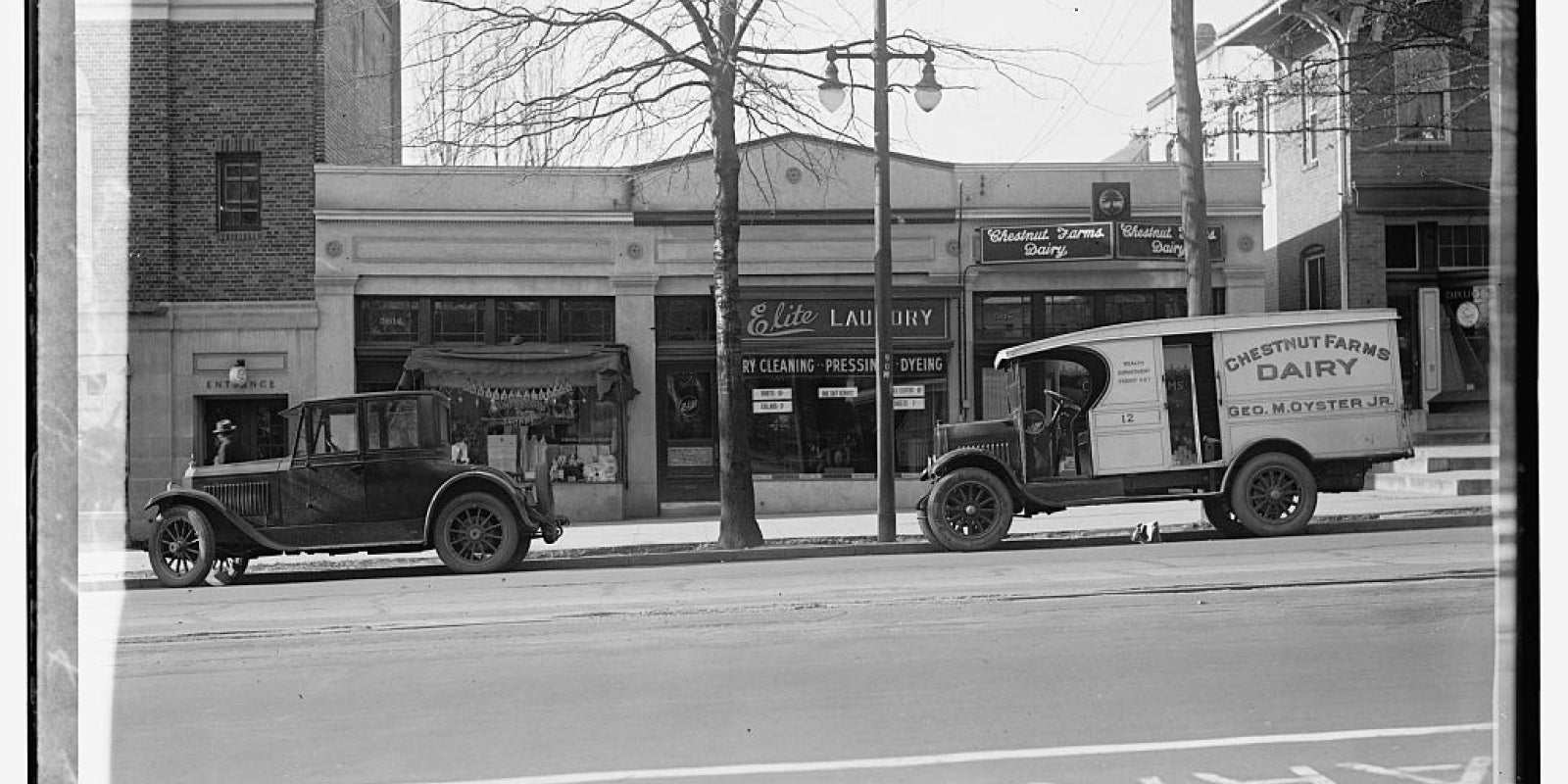
On March 4, 1939, after a three-day chase that stretched from Washington, DC, to Michigan and back, detectives caught the bootleggers red-handed. According to the front page of the Washington Post, “a fist fight developed before the eight men were captured,” but DC authorities finally had their culprits and seized nearly 2,500 gallons of high-quality contraband.
The operation had all the makings of a Prohibition-era bust, complete with bribery, the regular switching of license plates and vehicles to evade detection, and even alleged attempts on a detective’s life. But Prohibition in DC had ended almost exactly five years earlier. The illicit beverage being trafficked into DC was cream, and now, officials vowed to crack down on bootleg dairy. 1
Within days headlines promised a “war on bootleg milk,” and the House District Committee was considering an investigation into the “source and purity” of the District’s milk and “whether any conspiracy exists to violate the milk act.” 2
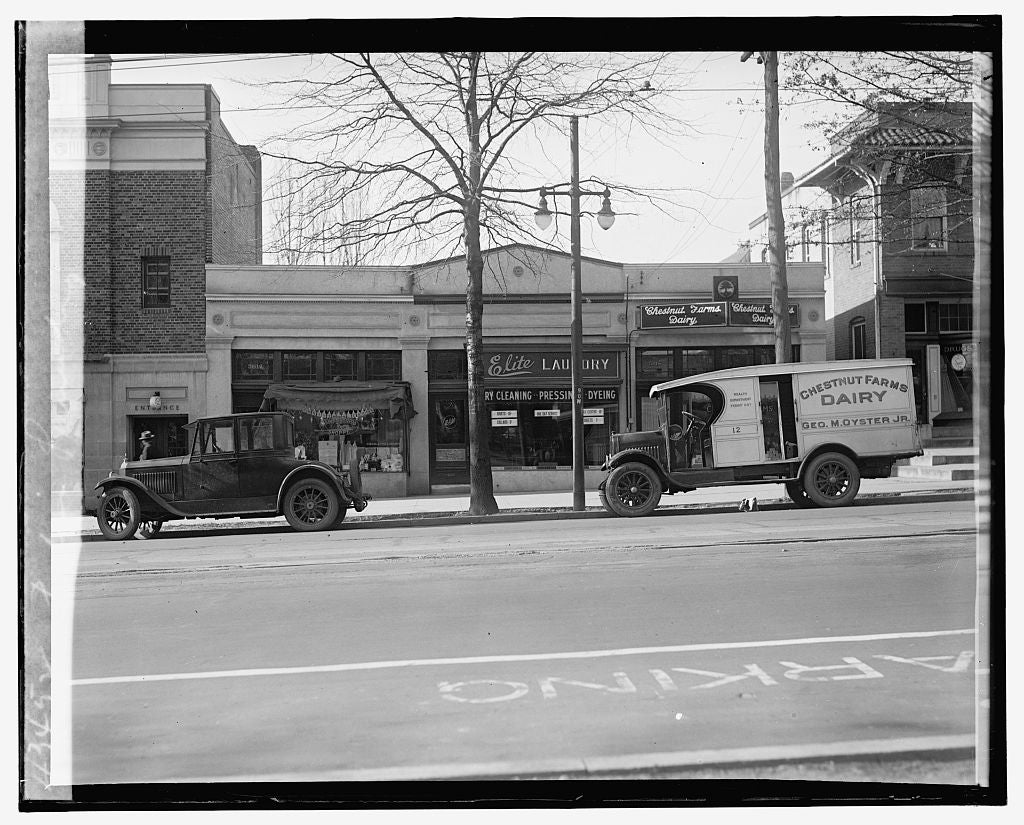
Today, milk regulation may seem like an unlikely subject for a major criminal investigation, but a century ago, milk was a major public health concern. Celebrated as “the modern elixir of life” and “the most nearly perfect of human foods,” milk was considered especially important for children’s health with public health reformers believing that increased milk purity was critical to lowering infant mortality. 3 In a time before widespread refrigeration and routine pasteurization, milk could become lethal at any moment between production and consumption. Further, doctors were increasingly identifying milk as a source of typhoid, scarlet fever, and other diseases, making a safe milk supply an urgent public health priority. 4
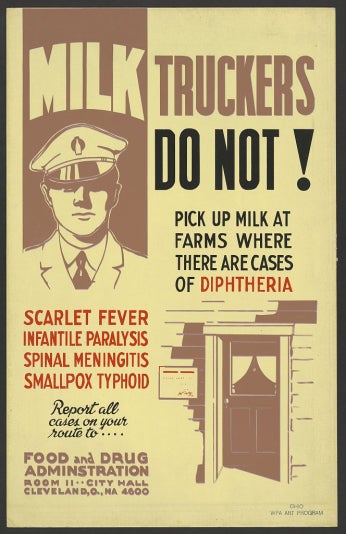
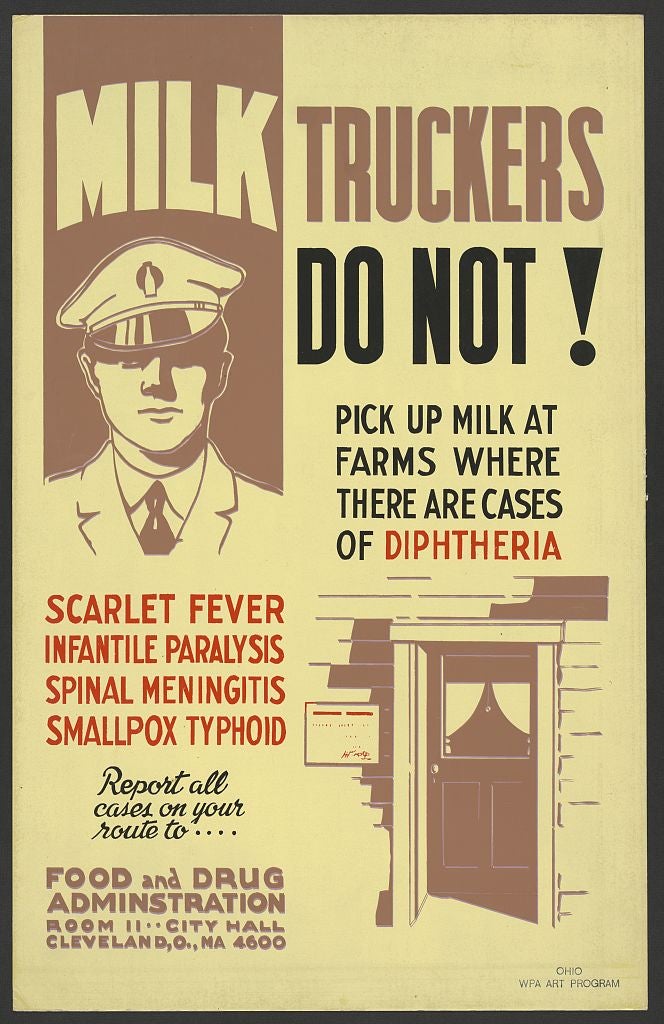
Washington began regulating its milk supply in March 1895, joining a national milk regulation movement that began in the northeast in the 1860s. 5 Although DC residents had no say in the matter, they seemed to support these new regulations. A month after DC’s milk bill was passed, the secretary of the Citizens’ Association of Anacostia delivered a lengthy speech alleging that impure milk was being sold in the neighborhood and demanding a swift investigation. 6
The following year, District Health Officer William C. Woodward revoked permits for two Maryland farms believed to be the source of a scarlet fever outbreak. He also sent health officers to intercept shipments of milk already on its way to consumers. 7 Woodward later credited milk regulation, alongside other recent public health measures, with helping suppress disease outbreaks. 8
Increased regulation also meant higher costs for the producers to comply with the regulations. In 1902, Washington dairyman Charles Breuninger, praised for his clean facilities and high-quality milk, told the Star, “It takes a great deal of money to go into the dairy business right; it takes very little money to go into it on a cheap scale and furnish insanitary milk.” He warned that “the public cannot expect to get pure milk” if farmers were forced to sell at too low a price. 9
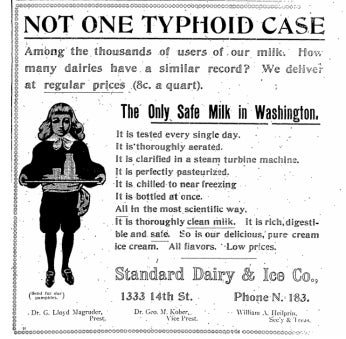
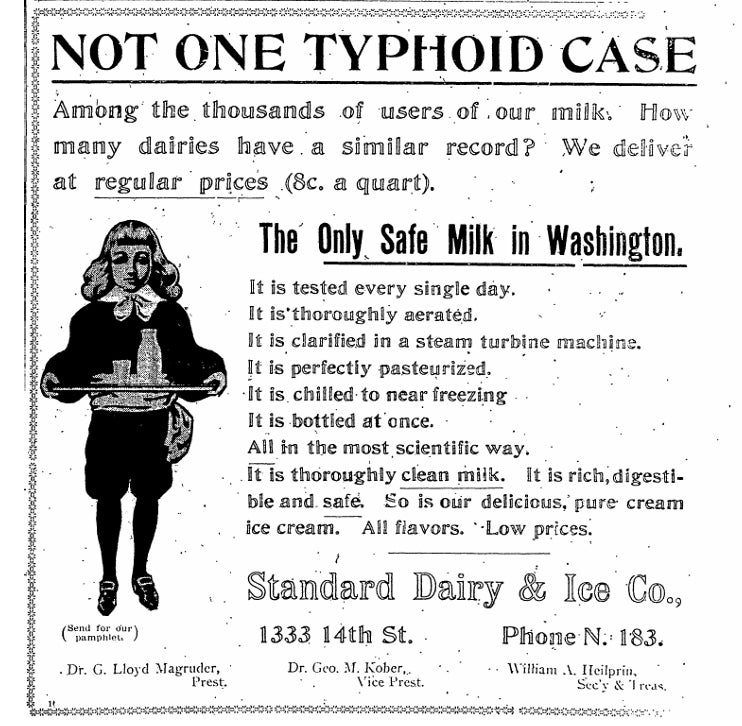
“When the price of milk is beaten down, the grade of milk goes down to meet the price.” 10
By the 1920s, the District had a strict system governing the production and sale of milk. The 1925 milk law formalized many of these existing health department regulations, which covered everyone and everything involved in producing or handling diary products sold in Washington, extending even to the “cubic feet of air space” available to each milk cow. 11 This bill also effectively restricted sales to milk and cream meeting standards roughly equivalent to Grade A, while other cities permitted “cheaper grades of milk” in addition to Grade A. Local producers spent “an inordinate amount of money” to meet these standards. 12
But the law contained an important exception. Farms did not need District permits to ship cream into DC if it was intended specifically to make ice cream.
The official justification was that cream was pasteurized a second time when making ice cream, thereby reducing sanitary concerns.
However, the rule was generally understood as a nod to Midwestern Congressmen, who wanted to keep the potentially lucrative DC market open to their constituents, and who had a say in District legislation. 13
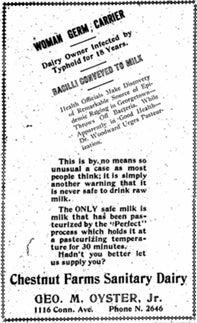
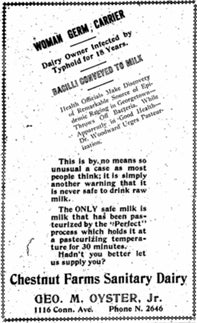
Maryland-Virginia Milk Producers’ Association – a cooperative of Maryland and Virginia dairy farmers and the DC area’s largest milk supplier – strongly opposed this exception. “Why safeguard the bottle of milk which the child drinks and not regulate the ice cream cone the child eats?” one Association representative asked. 14 The Association alleged that some imported cream was being diverted towards other parts of Washington’s dairy market. Because outside suppliers had to contend with fewer regulations and less enforcement, they could undercut local producers. 15
Opponents of the District’s regulations offered a different interpretation. Midwestern “producers and some local distributors” argued that “District regulations not only bar[red] them from interstate commerce… but tend[ed] to foster a local monopoly.” 16 One Maryland milk shipper, claiming to represent thirty-two independent milk dealers, accused the District of creating “milk barons.” 17 These concerns about competition in the dairy industry extended beyond Washington. In March 1939, a Federal Trade Commission official accused two major dairy companies of “dominating the Nation’s milk industry to a point of adversely affecting the national health,” identifying Washington as one of several cities where one of these two firms controlled much of the local market. 18
The Great Depression intensified these disputes as policymakers sought to support struggling farmers while keeping food affordable. 19 It also exposed the growing scale of milk bootlegging in the District. The milk industry in U.S. cities was generally divided into two steps and groups. The first group was the milk producers, or farmers, who would produce the milk. They would then sell their milk to Dairies, or milk distributors, who would pasteurize or treat the cream in an appropriate manner before distributing it to the public, generally through milk delivery.
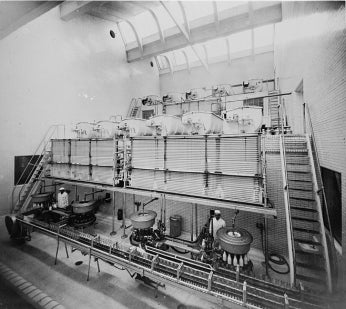
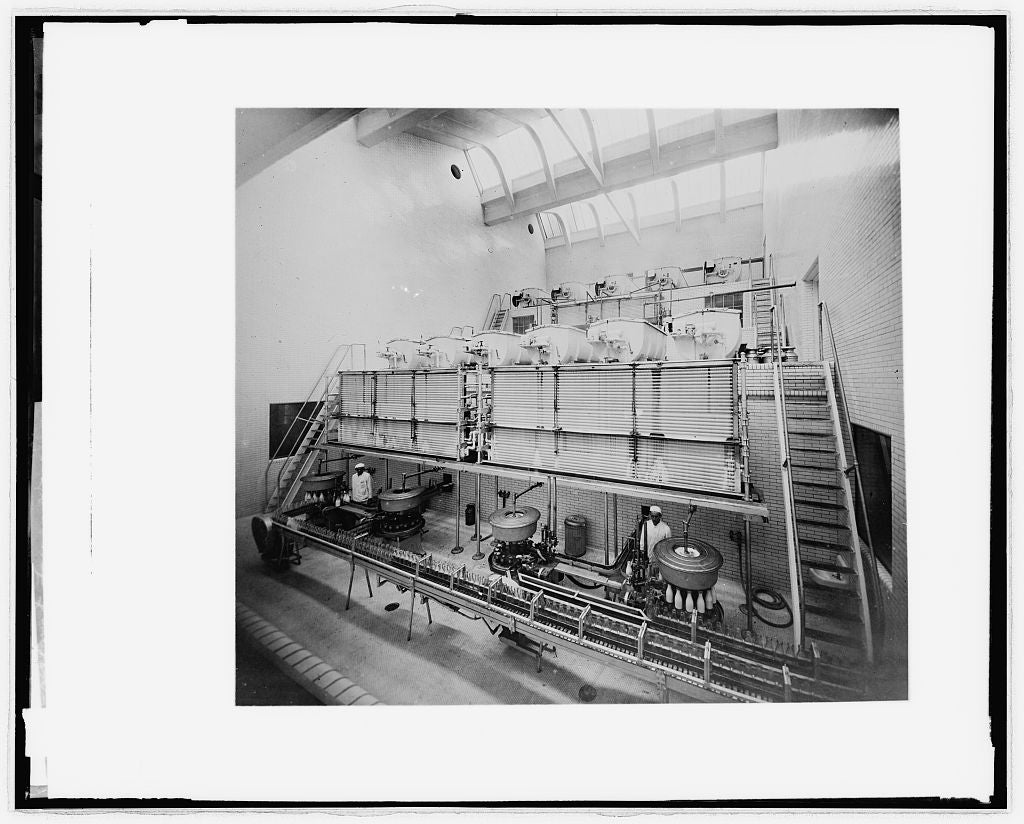
In 1933, government auditors traced shipments of 134,274 gallons of outside cream to six Washington dairies from 1929 through 1933. James J. Ward of Walker Hill Dairies – one of the companies involved – testified that he had resorted to unlicensed cream because he could not obtain adequate supplies from the producers’ association. 20
District health officials had reportedly spent years struggling to catch bootleg operators, with tip-offs repeatedly allowing shipments to escape at the last minute. 21 The problem became so widespread that the Maryland-Virginia Milk Producers’ Association funneled tens of thousands of dollars into its own milk investigations, spending $22,000 on detectives to pursue suspected bootleggers in 1935 and 1936 alone. 22
By 1939 the Association’s investigations were focused on Embassy-Fairfax, one of the few major DC-area distributors who did not purchase milk through the Producers’ Association, instead favoring independent farmers. The March 1939 arrests marked a rare breakthrough and a window into the dairy bootlegging underworld. The Association had spent “nearly two years” investigating Embassy-Fairfax’s bootleg operations before bringing DC officials onto the case about six weeks before the arrests, adding two police detectives to the team. Over the following weeks, the detectives observed the bootleggers making transfers at various points across Montgomery and Prince George’s County, moving cream from Michigan trucks into Maryland and DC trucks. The operators frequently changed the locations of these transfers to avoid detection. 23
Former Embassy-Fairfax employees later detailed the bootlegging operations that the detectives had been tracking. A former bookkeeper testified that the company had established its Maryland subsidiary, the Clover Dairy, specifically “to have a depot to handle outside cream and switch it into Embassy dairy,” conducting transfers “at night and behind locked garage doors.”
But not every transfer happened behind closed doors. Truck driver Edmund Dovell described making roughly 150 trips carrying approximately 1,000 gallons of cream at a time for Embassy-Fairfax. His cream cans, he said, were “concealed by empty egg crates,” and Embassy-Fairfax’s sales manager would “convoy” him along often circuitous routes through places like Leesburg and Takoma Park to avoid detection. In one particularly striking incident, a District health inspector watched Dovell load cream onto his truck and cover it with egg crates. The officer, Dovell recalled, “just ignored” him and kept talking to Dovell’s supervisor. 24
In the months after the arrests, investigators, dairy officials, and congressmen from the Mid-Atlantic and Midwest traded a series of sensational accusations. Richard J. Felber, one of the police detectives assigned to the case and a former Prohibition-era liquor investigator, testified that pursuing milk bootleggers was just as dangerous. “My life wasn’t in any more danger then than it was while I was following these milk bootleggers,” he stated. Felber alleged that Embassy-Fairfax's sales manager repeatedly tried to force him off the road, while the Clover Dairy manager hit his car and threatened him with a tire iron. 25
The investigation produced other sensational stories, too. Testimony revealed that bootleggers allegedly timed their milk runs to coincide with pigeon races, knowing that one District inspector owned racing pigeons that the other inspectors enjoyed watching. 26 Wiretaps also revealed that a West Virginia postmaster offered to influence the outcome of the Congressional inquiry for $1,000. 27
To add another wrinkle to the milk saga, the District’s own food inspection chief, Dr. Reid Ashworth, reported problems with the local milk supply, which brought the public health concerns underlying DC’s milk regulation under further scrutiny. “We’ve found the poorest grade of milk on the market that we’ve had for the last several years,” he told investigators. 28 He added that inspectors had found chemical neutralizers – substances that could be used to disguise the poor quality of stale cream – at several local dairies, including Embassy-Fairfax, and warned that the effort to catch bootleggers was drawing inspectors away from their primary responsibilities. 29 Moreover, Health Department testing found that Embassy-Fairfax’s seized bootleg cream was “of as high a grade as the average cream produced in the Washington milkshed.” 30 Although this did not mean every shipment was safe, the findings did raise questions about whether the bootleg crackdown was primarily to protect customers or to shield local producers from competition.
The end of this case was anticlimactic. In June 1939, Fairfax Farms Dairy, through its president, James J. Ward (yes, the same Ward from the 1933 bootlegging cases), pleaded guilty to importing cream without a Health Department permit and paid the maximum fine of $10. The government dropped the other nine charges against the company. 31
But the fine did not settle the broader dispute. In September, Ward and Indiana Representative William T. Schulte – one of the staunchest opponents to DC’s milk laws that spring – tried to open Washington’s market to Midwestern farms. District officials acknowledged that outside producers could theoretically qualify to sell in Washington but argued that the Health Department lacked the inspectors and funding to supervise farms in Ohio and Indiana. Thus, the milkshed remained closed. 32
A February 1940 retrospective described the previous year’s milk hearings as an investigation “gone wild,” referencing the more sensational stories revealed in hearings. 33 Embassy-Fairfax began buying cream from the Maryland-Virginia Milk Producers’ Association, though their relationship was hardly free of tension. In November 1942, Embassy-Fairfax sued after the Association failed to meet its contracted deliveries. The Association argued that it could not obtain enough milk to fulfill its obligations amidst an ongoing regional milk shortage. The parties eventually settled, agreeing to provide Embassy-Fairfax with a proportionate share of the available supply. 34
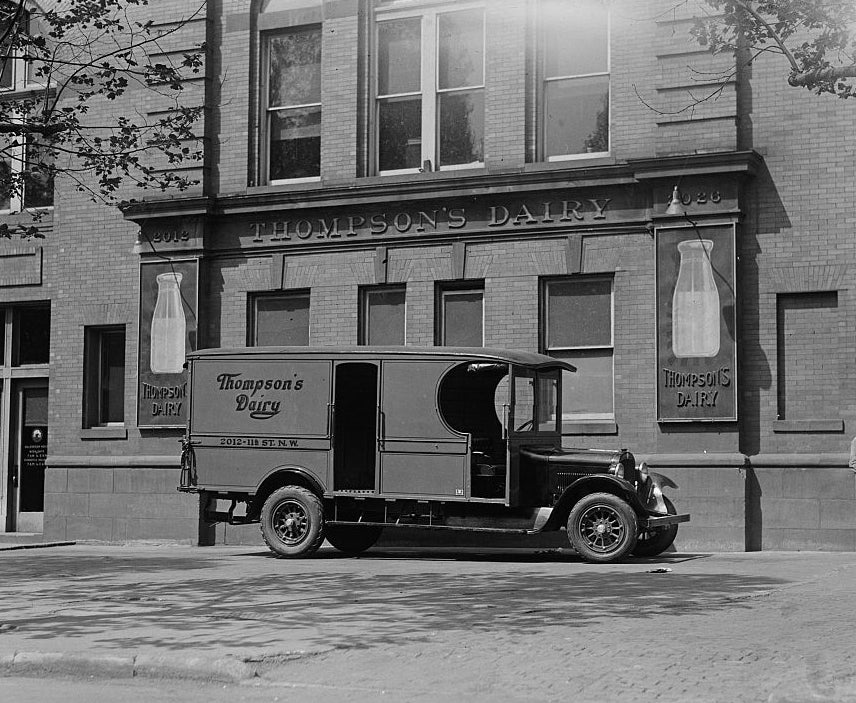
Wartime shortages eventually forced the District to relax its restrictions on outside milk. In 1947, the Commissioners authorized imports from beyond the Washington milkshed, including areas outside local Health Department supervision. The arrangement lasted until June 30, 1950, when imports from beyond the milkshed were once again barred. 35
In 1954, the Maryland-Virginia Milk Producers’ Association bought Embassy-Fairfax, further consolidating its position in the Washington market. In 1960, the Supreme Court upheld an order requiring the Association to divest itself of the purchase, finding that the acquisition violated federal antitrust law by substantially reducing competition. 36
DC’s milk largely fell from the public’s radar after the 1960s. But the geographic restrictions that shaped the controversy of 1939 eventually gave way. An amendment to the 1925 milk law, enacted in 1971, established new standards for milk shipped into the District, allowing imports beyond the traditional Washington milkshed, provided they met specific sanitation requirements. The amendment also required all milk products sold to consumers in DC to be pasteurized, meaningfully reducing the risks of milk-borne disease. 37 More than a century after milk became a major public health concern, the District had largely settled the question of how to ensure a safe milk supply, although today’s raw milk advocates just might reopen the case.
Footnotes
- 1
James D. Secrest, “8 Arrested, Truckload Of ‘Bootleg’ Cream Seized,” Washington Post, Mar. 5, 1939, pp. 1, 4.
- 2
James D. Secrest, “D.C. to Put ‘Teeth’ in Milk Code: Will Tighten Law In Effort to Halt Bootlegging; Dairy Head, Aide Held,” Washington Post, Mar. 6, 1939, pp. 1, 4; “Parley Planned to End Influx of ‘Bootleg’ Milk in D.C. Area: Seal to Confer with Officials of Maryland and Virginia,” The Evening Star, Mar. 6, 1939, pp. A1, A4; “House Asked to Investigate ‘Bootleg’ Milk: Smith of Alexandria, Urges Probe; District Code Revision Drafted House Milk Probe Asked by Smith,” Washington Post, Mar. 7, 1939, pp. 1, 11; “Seal Prepares More Stringent Milk Laws: Smith Presses House For Action on Bill Calling for Inquiry,” The Evening Star, Mar. 7, 1939, p. B1; “Milk and Health,” The Evening Star, Mar. 7, 1939, p. A8; “D. C. Revises Milk Rules as Inquiry Is Sped: Moves to Put ‘Teeth’ in Regulation; House Unit Approves Hearings,” Washington Post, Mar. 8, 1939, pp. 1, 4; “Action on Milk Probe Seen by End of Week: House Rules Unit Clears Way for Investigation,” The Evening Star, Mar. 8, 1939, p. B1.
- 3
Samuel J. Crumbine and James A. Tobey, The Most Nearly Perfect Food: The Story of Milk (The Williams & Wilkins Company, 1929), p. 17; Paul Huck and Ronald F. Wright, “Counting Cases About Milk, Our ‘Most Nearly Perfect’ Food, 1860-1940,” Law & Society Review 36, no. 1 (2002): 58-59, https://doi.org/10.2307/1512193; For examples of the connections between infant mortality and milk purity, see: Kendra Smith-Howard, Pure and Modern Milk: An Environmental History since 1900 (Oxford University Press, 2013); “Health Statistics: Dr. W. C. Woodward Submits His Annual Report,” The Evening Star, Oct. 28, 1901, p. 8; “Pure Milk and Cheaper Ice,” Washington Post, Apr. 13, 1893, p. 4; James D. Secrest, “Fifteen Million Dollar Business at Stake in D. C. Milk Investigation: May Result in Personnel Shake-up: Congressmen And Producers Seek to Maintain High Standards,” Washington Post, May 7, 1939, pp. B4, B6.
- 4
Huck and Wright, “Counting Cases,” pp. 51, 57-60; Smith-Howard, Pure and Modern Milk, pp. 12-13, 19.
- 5
Huck and Wright, “Counting Cases,” pp. 59-60; “Life and Death: Topics Discussed in the Health Officer’s Report,” The Evening Star, Nov. 9, 1896, p. 11.
- 6
“Anacostia Citizens: Told There is No Chance of Free Delivery,” The Evening Star, Apr. 27, 1895, p. 7; Star, Health Officer’s Report, 1896.
- 7
“Traced to Milk: Believed to Have Caused the Spread of Scarlet Fever,” The Evening Star, Nov. 18, 1896, p. 5.
- 8
“Commissioners’ Annual Report: The Recommendations Made for the Good of the District of Columbia,” The Evening Star, Dec. 6, 1897, p. 3; “Annual Statement: Commissioners’ Report Submitted to the President Today,” The Evening Star Part 2, Dec. 3, 1900, p. 17; Star, “Health Statistics,” 1901.
- 9
The Investigator, “White Tiling in His Milk Room: Points of Perfection Attained by Breuninger’s Dairy,” The Evening Star, Feb. 22, 1902, p. 8.
- 10
Investigator, “White Tiling,” p. 8.
- 11
James D. Secrest, “Public Health Milk Code for D. C. Attacked: Frank’s Proposal Hit by Seal; Monopoly Charge is Hurled,” Washington Post, May 5, 1939, pp. 1, 13.
- 12
Secrest, “Public Health Milk Code,” pp. 1, 13; James D. Secrest, “House Told 3 D.C. Dairies Doctor Cream: Neutralizers Found in their Products, Ashworth Testifies at House Inquiry,” Washington Post, May 4, 1939, p. 12. Although the act did not explicitly require Grade A milk, Stat 13 of DC’s 1925 milk law limited milk and cream sold in the District to bacterial counts and sanitary standards that corresponded to Grade A classifications in contemporary federal recommendations. Compare “An Act To Regulate within the District of Columbia the Sale of Milk, Cream, and Ice Cream, and for Other Purposes,” § 13, 43 Stat. 1004, pp. 1006-1007 (1925), with U.S. Public Health Service, Public Health Bulletin No. 220: Public Health Service Milk Ordinance and Code (Washington, DC: Government Printing Officer, 1935), pp. 5-11. See Also: “The Milk Inquiry,” Washington Post, May 5, 1939, p. 14.
- 13
Secrest, “Fifteen Million Dollar Business at Stake,” pp. B4, B6.
- 14
“Milk Code Study is Proposed Here: Representative Committee Considered to Reconcile Conflicting Interests,” The Evening Star, Feb. 12, 1938, p. A16; “Milk Code Draft Ordered After Unruly Hearing: Commissioners Decide on Committee After Furious Eight Hours,” Washington Post, Feb. 12, 1938, p. 3.
- 15
Star, “Milk Code Study,” p. A16; Secrest, “Fifteen Million Dollar Business at Stake,” pp. B4, B6; Secrest, “D.C. to Put ‘Teeth,’” pp. 1, 4.
- 16
Secrest, “Fifteen Million Dollar Business at Stake,” pp. B4, B6.
- 17
James D. Secrest, “Dairy Books Subpoenaed in Milk Fight: Westerners Defend Cream Imports; Embassy-Fairfax Workers Testify,” Washington Post, May 9, 1939, pp. 1, 4; While these concerns were pervasive in the 1930s, it should be noted that the potential for monopoly in DC’s milk market appeared in the context of proposed milk regulations as early as 1910. See: “Dairy Farming in County Gains, C. of C. is Told: Fairfax Receives $26,000 Annually in Taxes, Kincheloe Says,” Washington Post, Sept. 10, 1936, p. 24; “Pushing The Milk Inquiry: Wickersham Asks Information as to Alleged Trust; Producers’ Association to Decide This Morning on Tuberculin Test Fight Methods,” Washington Post, Oct. 25, 1910, p. 9; “Insists Upon Pure Pennsylvania Milk: Fowler, Before House Committee, Objects to Certain Brands Brought into District,” Washington Post, Oct. 29, 1921, p. 2.
- 18
John C. Henry, “U.S. Milk Monopoly Charged at Hearing to Two Companies: Health of Nation Affected Adversely, F.T.C. Aide Says,” The Evening Star, Mar. 9, 1939, pp. A1, A4; B. F. Noland to Editor, “Pleads for Dairymen: Physician Says Cost of Milk Production Warrants Higher Price,” Washington Post, Apr. 17, 1907, p. 11.
- 19
“Huge U.S. Loan to Dairy Trade Draws Attack: King Receives Criticism Which Cite Profits Bared in Quiz,” Washington Post, Aug. 21, 1933, p. 11.
- 20
“‘Bootleg’ Milk Here 4 Years, Inquiry Shows: Independent Distributors Say Nearby Supply Inadequate,” Washington Post, Nov. 7, 1933, p. 2.
- 21
Murrey Marder, “D.C. Milk Probes Can Be Rugged,” Washington Post, Mar. 7, 1948, p. B8; Secrest, “House Told 3 D. C. Dairies,” pp. 1, 12; Secrest, “8 Arrested,” pp. 1, 4.
- 22
Star, “Milk Code Study,” p. A16.
- 23
James D. Secrest, “Officer Charges Attacks to Dairy Firm Aides: Tells of Shadowing Trucks Suspected Of Bootlegging Cream Policeman Charges Attacks to Dairy,” Washington Post, May 10, 1939, pp. 1, 6.
- 24
Secrest, “Dairy Books Subpoenaed,” pp. 1, 4.
- 25
Secrest, “Officer Charges Attacks,” pp. 1, 6.
- 26
Marder, “D.C. Milk Probes,” p. B8; Secrest, “Dairy Books Subpoenaed,” p. 1.
- 27
James D. Secrest, “Parties Exposed, Deal Alleged in Milk Inquiry: Sub-Committee’s Secretary Resigns; Office Building of House Tapped,” Washington Post, May 27, 1939, pp. 1, 14; “Faulkner’s Testimony at Milk Inquiry: Denies Most of Statements Read from Stenographic Report,” Washington Post, June 3, 1939, p. 3.
- 28
Secrest, “House Told 3 D.C. Dairies,” p. 12.
- 29
Secrest, “House Told 3 D.C. Dairies,” p. 12.
- 30
The high quality of the captured shipment did not mean that every shipment was safe: a former Embassy-Fairfax employee described a truck that broke down while transporting cream, leaving the product in “bad” condition when it arrived. He said he understood that the company used chemical additives to “freshen” the cream. Secrest, “Dairy Books Subpoenaed,” pp. 1, 4; Secrest, “Fifteen Million Dollar Business at Stake,” pp. B4, B6.
- 31
“Dairy Admits Bootlegging, Gets $10 Fine: Other Charges Against Fairfax Killed; Faulkner Posts Bond,” Washington Post, June 23, 1939, p. 26.
- 32
“Factional Dispute is Caused by Milk Marketing Plans: Local Distributors Disagree on Milk Raise and Cream Reduction,” The Evening Star, Aug. 10, 1933, p. B1.
- 33
James D. Secrest, “District Inquiries Keep Political Plot Boiling,” Washington Post, Feb. 25, 1940, p. F1.
- 34
“Producers Must Fulfill Milk Contract,” Washington Post, Nov. 24, 1942, p. B1; “Judge Vacates Va.-Md. Milk Contract Order,” Washington Post, Nov. 25, 1942, p. 12; “Compromise is Reached on Milk Contract,” Washington Post, Dec. 1, 1942, p. 18.
- 35
“Importation of Milk to D.C. From Outside Area Authorized,” Washington Post, Oct. 24, 1947, p. 2; Edward F. Ryan, “Ban on Milk Imports Set by D.C. Heads: Restriction Lifted in War Scarcity Ordered for June 30,” Washington Post, Dec. 28, 1949, pp. 1, 11.
- 36
Milk Producers Assn. v. United States, 362 U.S. 458 (1960).
- 37
District of Columbia Revenue Act of 1970, Pub. L. No. 91-650, tit. VI, § 601, 84 Stat. 1930, 1949 (1971).