‘The Business of this Convention’: George Washington, George Mason, and a Feud of Constitutional Proportions
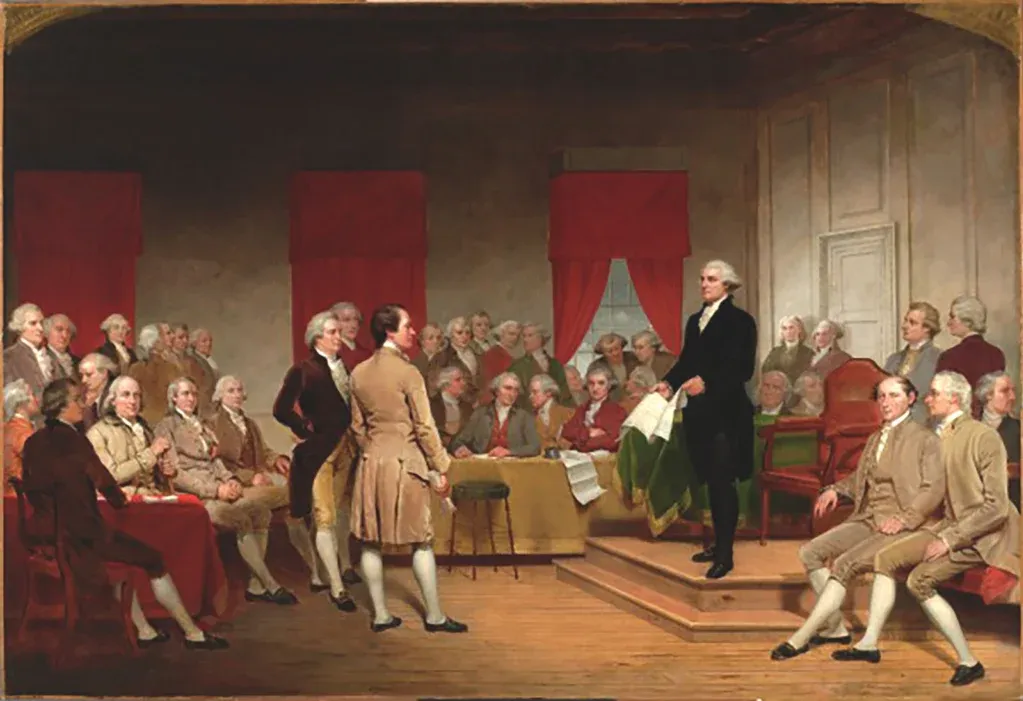
In May of 1787, fifty-five delegates from twelve of the thirteen states (minus Rhode Island) gathered in Independence Hall in Philadelphia, Pennsylvania. Despite the early summer heat, they agreed to shutter the windows and swore to keep the proceedings of their meetings secret to prevent any outside influence on their deliberations. It had been eleven years since the signing of the Declaration of Independence, and nearly four since the end of the American Revolutionary War. And despite the victory, our new nation was fragile.
At the center was America’s first constitution, called the Articles of Confederation. It created a purposefully weak central government, providing a loose framework to avoid the kind of monarchical, one-sided power that the country had just fought against. There was a one-house legislature, no executive or judicial branch, no standing army, and no power to levy tax or enforce laws. With a government on the brink of collapse, the constitutional convention in Philadelphia was called to revise the Articles of Confederation.
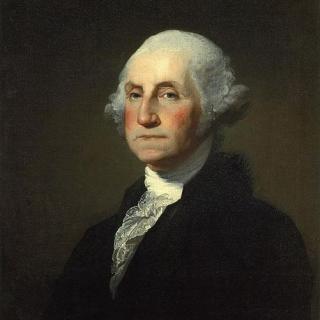
Among the delegates sent to the convention was a reluctant George Washington, who represented his home state of Virginia along with Edmund Randolph, James Madison, James McClurg, John Blair, George Waithe, and Washington’s longtime friend and neighbor, George Mason. 1 After the war, Washington had retired to his home at Mount Vernon and was keen to leave politics behind. When it became apparent that revision of the Articles was necessary, he fully supported the idea of a convention but had to be persuaded to participate in the proceedings. 2 Eventually he agreed, and from his lodging in Philadelphia, days after the Constitutional Convention began, he wrote to his friend Thomas Jefferson:
“The business of this Convention is as yet too much in embryo to form any opinion of the result. Much is expected from it by some—but little by others—and nothing by a few—That something is necessary, all will agree; for the situation of the General Governmt (if it can be called a governmt) is shaken to its foundation—and liable to be overset by every blast. In a word, it is at an end, and unless a remedy is soon applied, anarchy & confusion will inevitably ensue.” 3
Washington’s reputation and the great respect he earned from his fellow countrymen during the war made his appointment as president of the convention one of the only unanimous votes of the proceedings. 4 In this role, he viewed himself as a non-partisan mediator, observing but not engaging, and only speaking to vote or to reign in overzealous deliberation. 5
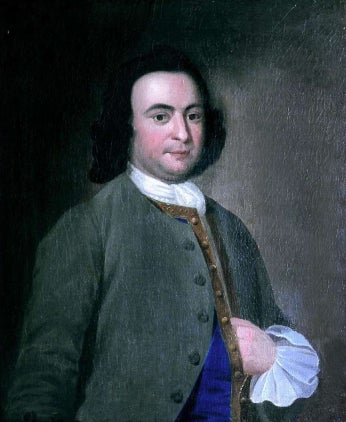
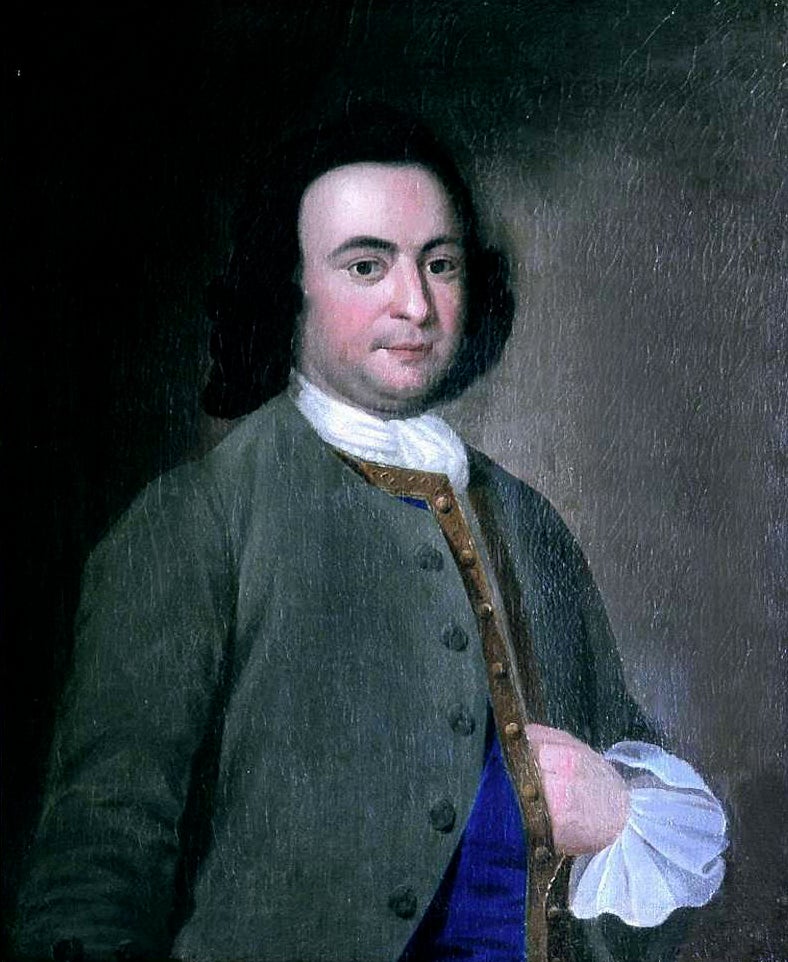
George Mason, on the other hand, was one of the most vocal delegates. Once described as “too passionate,” by a contemporary, 6 Mason was nearing the age of 60 in 1787 and was also newly retired from politics. 7 Unlike his friend George Washington, however, Mason didn’t need much convincing to attend the convention. As William Pierce, a delegate from Georgia, observed during their time in Philadelphia, “[Mason] is able and convincing in debate, [and] steady and firm in his principles.” 8 As it turned out, those principles and strong convictions, would not only impact the Convention, but Mason’s friendship with George Washington.
Every day the delegates sat in Independence Hall and debated amendments to the Articles of Confederation. George Washington wrote in his personal diary that they would spend “no less than five, for a large part of the time Six, and sometimes 7 hours sitting every day.” 9 Four months later, they had completely scrapped the Articles of Confederation and created an entirely new Constitution in its place. But at the end of the convention only thirty-nine of the fifty-five delegates signed the document. George Washington was one of them. George Mason was not.
In the last few weeks of deliberation, Mason had moved to include a Bill of Rights to the Constitution. However, his motion was rejected by the other delegates. Critics of the proposal argued that a “Bill of Rights” was redundant when the Constitution already indirectly guaranteed the rights of Americans. To Mason, a guarantee of rights and liberties was not a matter to be assumed or suggested, but ironclad in writing. In protest of this rejection, he penned his “Objections to the Constitution,” which included this grievance and built upon the opinions others who shared concerns about the new Constitution, like Edmund Randolph of Virginia and Elbridge Gerry of Massachusetts.
The delegation in Philadelphia split into two groups, the federalists and the anti-federalists, those who wanted a strong central government, and those that did not. In Mason’s “Objections,” he outlined some of his anti-federalist principles. Among those were concerns about the scope of unchecked executive power, his belief that the House of Representatives was not truly representative of the nation, and the institution of slavery, one of the most contentious topics of the day. 10 , 11 The question of slavery permeated discussions about commerce and congressional representation, as well as state and federal powers during the debates. And though there is no direct reference to slavery in the Constitution, it was one of the most divisive issues of the convention.
Most notably, it produced the “Three-Fifths Compromise,” which inhumanely determined that enslaved people would be counted as 3/5ths of a person when calculating a state’s total population, which directly affected the total number of elected officials per state in the House of Representatives. Additionally, there was debate over the Atlantic slave trade, and whether it should be allowed to continue. The delegates’ “solution” was to create a clause in the constitution that stated the federal government could not prohibit the slave trade or change this clause until the year 1808, twenty years later.
George Mason embodied a paradox with regard to slavery. He was an enslaver, who kept dozens of Black men and women in bondage on his Fairfax County plantation, Gunston Hall. At the same time, he argued that the slave trade was harmful to the Union. As he proclaimed in an August 22, 1787 address to the convention:
“Slavery discourages arts & manufactures. The poor despise labor when performed by slaves. They prevent the immigration of Whites, who really enrich & strengthen a Country. They produce the most pernicious effect on manners. Every master of slaves is born a petty tyrant. They bring the judgment of heaven on a Country. As nations can not be rewarded or punished in the next world they must be in this. By an inevitable chain of causes & effects providence punishes national sins, by national calamities. . . [It is] essential in every point of view that the Genl. Govt. should have power to prevent the increase of slavery.” 12
It was not the first time 13 Mason had shared sentiments opposing slavery. Yet, he did not move to manumit any of the people he enslaved during his lifetime.
Mason’s views and actions bore some similarities to his Fairfax County neighbor, George Washington. Washington owned over 120 slaves yet privately stated that he did not want to buy and sell enslaved persons. 14 However, the General was not willing to speak out publicly, feeling that debates about slavery were too risky during the formation of the new government. 15 Mason’s decision to campaign against the new Constitution grated on Washington.
After the constitutional convention, Mason continued his attack on this new plan of government, specifically mentioning the clauses about slavery. In order for the Constitution to be adopted, each state legislature still had to ratify it in their own state conventions – a process that would take months. Mason went on a campaign throughout Virginia (with plans to continue into other southern states) trying to convince his fellow Virginians to reject the Constitution and oppose its ratification.
In addition to his argument against the slave trade, he continued to express his disapproval of the lack of oversight on executive and judicial powers and the lack of a Bill of Rights for the protection of civil liberties. News of Mason’s campaign rippled through state legislatures. As one New Yorker wrote, “A Mr. Mason, who was a delegate to the Convention, from Virginia, has, since the Convention broke up, been through the back Counties of that State, haranguing the Inhabitants, and pointing out the dangerous effects or consequences which would inevitably flow from the new Constitution.” 16 Mason sent copies of his “Objections to the Constitution” to his close acquaintances, including George Washington.
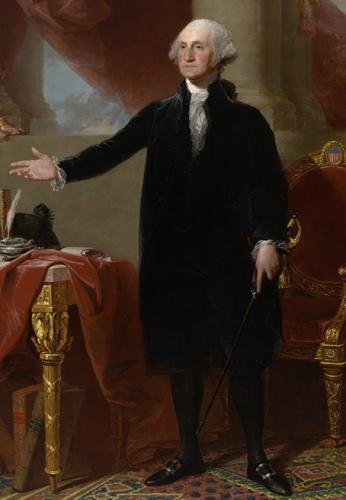
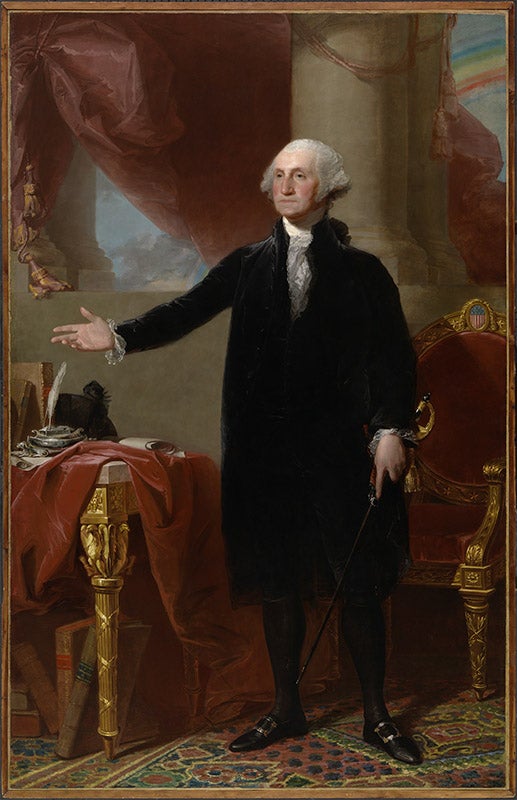
In a letter written at Gunston Hall on October 7, 1787, Mason suggested to Washington that his objections should be shared with the public and stated that he would heartily oppose any attempt to prevent his campaign against ratification. “You will readily observe,” Mason wrote, “that my Objections are not numerous… tho’ in my mind, some of them are capital ones.” 17 Washington was already unhappy that his friend had refused to sign the Constitution and his conduct at the end of the convention. Three days after Mason wrote to him, Washington penned a letter of his own to James Madison, “He [Mason] has, I am informed, rendered himself obnoxious in Philadelphia by the pains he took to disseminate his objections amongst some of the leaders.” 18
The next month, Washington's secretary Tobias Lear had the “Objections” printed the Virginia Journal so that they could be publicly refuted. 19 As the process of ratifying the constitution dragged on, Mason continued his mission to spread the word about the perils of the new government – a fact that frustrated some of his contemporaries. As James Madison wrote to Thomas Jefferson at the end of April 1788, eight months after the convention in Philadelphia concluded, “Col. Mason is growing every day more bitter, and outrageous in his efforts to carry his point [against the Constitution].” 20
In the end, of course, the Constitution was ratified and it took effect on March 4, 1789. But George Mason did not lose his fight entirely. In the fall of 1789, the First Congress of the United States proposed a series of amendments, which offered specific protections for individual liberties and put restrictions on the powers of government. Known as the Bill of Rights, these first ten amendments were ratified by the states on December 15, 1789. They were modeled after the Virginia Declaration of Rights, which Mason had penned in 1776.
Though they remained cordial, George Mason and George Washington never repaired the relationship they had before the convention began. In fact, the feud between the once good friends became so infamous that you can still see evidence of it today at George Mason University. A statue of George Mason stands in the middle of Wilkins Plaza, at the heart of the Fairfax, VA campus. In one hand is a copy of his Virginia Declaration of Rights, and the other rests on a stack of philosophical books that influenced his enlightenment ideals. Notably, his statue faces southeast, away from Washington, D.C. Why? Campus legend has it that Mason's back is forever turned on George Washington.
In 2022, during the university’s 50th anniversary celebrations, a new addition to the plaza was unveiled in the memorial to the Enslaved People of George Mason. What began as a student-led project at the Center for Mason Legacies, developed into a space on campus where students and visitors are invited to “contemplate the importance of dialogue in the reconciliation of the beliefs of the nation’s founders with their participation in slavery.” 21
Today, it is impossible to talk about the founding of our country without noting the paradox of the many founding fathers who enslaved hundreds of people while fighting for freedom under the banner that declared, “all men are created equal.” The feud between George Mason and George Washington serves as a reminder that in their pursuit of "a more perfect union," our nation was not built by perfect men.
Footnotes
- 1
Teaching American History. “Attendance at the Constitutional Convention.” https://www.tahdigitalatlas.org/attendance-at-the-constitutional-convention/.
- 2
George Washington’s Mount Vernon. “Constitutional Convention.” https://www.mountvernon.org/library/digitalhistory/digital-encyclopedia/article/constitutional-convention.
- 3
“George Washington to Thomas Jefferson, 30 May 1787,” Founders Online, National Archives, https://founders.archives.gov/documents/Washington/04-05-02-0188. [Original source: The Papers of George Washington, Confederation Series, vol. 5, 1 February 1787 – 31 December 1787, ed. W. W. Abbot. Charlottesville: University Press of Virginia, 1997, pp. 203–208.]
- 4
“[Diary Entry: 25 May 1787].” Founders Online, National Archives, https://founders.archives.gov/documents/Washington/01-05-02-0002-0005-0025. [Original source: The Diaries of George Washington, vol. 5, 1 July 1786 – 31 December 1789, ed. Donald Jackson and Dorothy Twohig. Charlottesville: University Press of Virginia, 1979, p. 162.] and George Washington’s Mount Vernon. “Presiding Over the Convention: The Indispensable Man.” https://www.mountvernon.org/george-washington/constitutional-convention/convention-president.
- 5
George Washington’s Mount Vernon. “Constitutional Convention.” https://www.mountvernon.org/library/digitalhistory/digital-encyclopedia/article/constitutional-convention.
- 6
National Archives. “The Founding Fathers: Virginia.” America’s Founding Documents. https://www.archives.gov/founding-docs/founding-fathers-virginia#mason. AND Cyrus Griffin to James Madison, New York, 14 April 1788 https://csac.history.wisc.edu/wp-content/uploads/sites/281/2025/06/CSAC-FoF-M-NEW-1.pdf.
- 7
National Archives. “The Founding Fathers: Virginia.” America’s Founding Documents. https://www.archives.gov/founding-docs/founding-fathers-virginia#mason
- 8
“William Pierce: Sketches of Delegates to the Constitutional Convention, c. September 1787 .” Founders on the Founders, n.d. https://csac.history.wisc.edu/wp-content/uploads/sites/281/2025/06/CSAC-FoF-M-NEW-1.pdf. p. 89.
- 9
“[Diary entry: 17 September 1787],” Founders Online, National Archives, https://founders.archives.gov/documents/Washington/01-05-02-0002-0009-0017. [Original source: The Diaries of George Washington, vol. 5, 1 July 1786 – 31 December 1789, ed. Donald Jackson and Dorothy Twohig. Charlottesville: University Press of Virginia, 1979, p. 185.]
- 10
George Mason. “Objections to the Constitution of Government Formed by the Convention,” ca. September 17, 1787. Manuscript document. George Washington Papers, Manuscript Division, Library of Congress. https://www.archives.gov/files/legislative/resources/education/bill-of-rights/images/mason.pdf
- 11
George Washington’s Mount Vernon. “Issues of the Constitutional Convention.” https://www.mountvernon.org/george-washington/constitutional-convention/issues-of-the-constitutional-convention.
- 12
George Mason’s Gunston Hall. “George Mason & Slavery.” May 27, 2025. https://gunstonhall.org/george-mason-slavery/.
- 13
Over the course of his life, Mason wrote about his dislike of slavery as an institution. One example is the 1774 Fairfax Resolves “it is the Opinion of this Meeting, that during our present Difficulties and Distress, no Slaves ought to be imported into any of the British Colonies on this Continent; and we take this Opportunity if declaring our most earnes Wishes to see an entire Stop for ever put to such a wicked cruel and unnatural Trade.” See George Mason’s Gunston Hall. “George Mason & Slavery.” May 27, 2025. https://gunstonhall.org/george-mason-slavery/.
- 14
George Washington’s Mount Vernon. “Washington’s Changing Views on Slavery.” https://www.mountvernon.org/george-washington/slavery/washingtons-changing-views-on-slavery.
- 15
George Washington’s Mount Vernon. “Washington’s Changing Views on Slavery.” https://www.mountvernon.org/george-washington/slavery/washingtons-changing-views-on-slavery.
- 16
Charles Tillinghast to Hugh Hughes, New York, 12 October 1787 https://csac.history.wisc.edu/wp-content/uploads/sites/281/2025/06/CSAC-FoF-M-NEW-1.pdf page 90
- 17
George Washington Papers, Series 4, General Correspondence: George Mason to George Washington, October 7. October 7, 1787. Manuscript/Mixed Material. https://www.loc.gov/item/mgw435962/.
- 18
George Washington to James Madison, Mount Vernon, 10 October 1787 https://csac.history.wisc.edu/wp-content/uploads/sites/281/2025/06/CSAC-FoF-M-NEW-1.pdf pg 89-90.
- 19
John P. Kaminski et al., eds., “Brutus, Virginia Journal, 22 November 1787 (Excerpt).” The Documentary History of the Ratification of the Constitution, Vol. VIII: Virginia [1] (Madison, Wis.: Wisconsin Historical Society Press, 1988), 174–75. https://csac.history.wisc.edu/wp-content/uploads/sites/281/2024/04/DC2-05-05-03_Brutus_22Nov87.pdf. and Mason, George. “George Mason’s Objections to the Constitution (November 22, 1787).” November 22, 1787. https://consource.org/document/george-masons-objections-to-the-constitution/20170208161049/.
- 20
James Madison to Thomas Jefferson, Orange, Va., 22 April 1788 https://csac.history.wisc.edu/wp-content/uploads/sites/281/2025/06/CSAC-FoF-M-NEW-1.pdf page 90
- 21
George Mason University. “Wilkins Plaza Memorial | George Mason University.” https://www.gmu.edu/about/wilkins-plaza-memorial
![Sketch of the mythical fuan by Pearson Scott Foresman. [Source: Wikipedia]](/sites/default/files/styles/crop_320x320/public/2023-10/Goatman_Wikipedia_Faun_2_%28PSF%29.png?h=64a074ff&itok=C9Qh-PE1)