The First Female President Was Never Elected and Didn’t Want the Job: Edith Bolling Galt Wilson’s Work in the White House
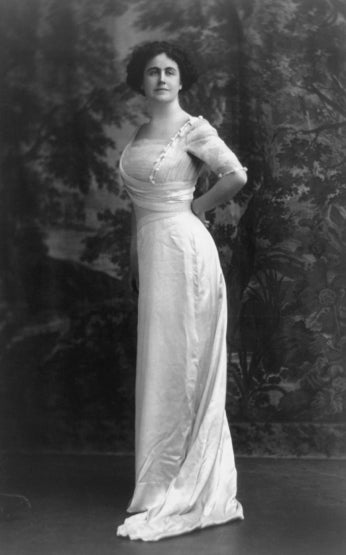
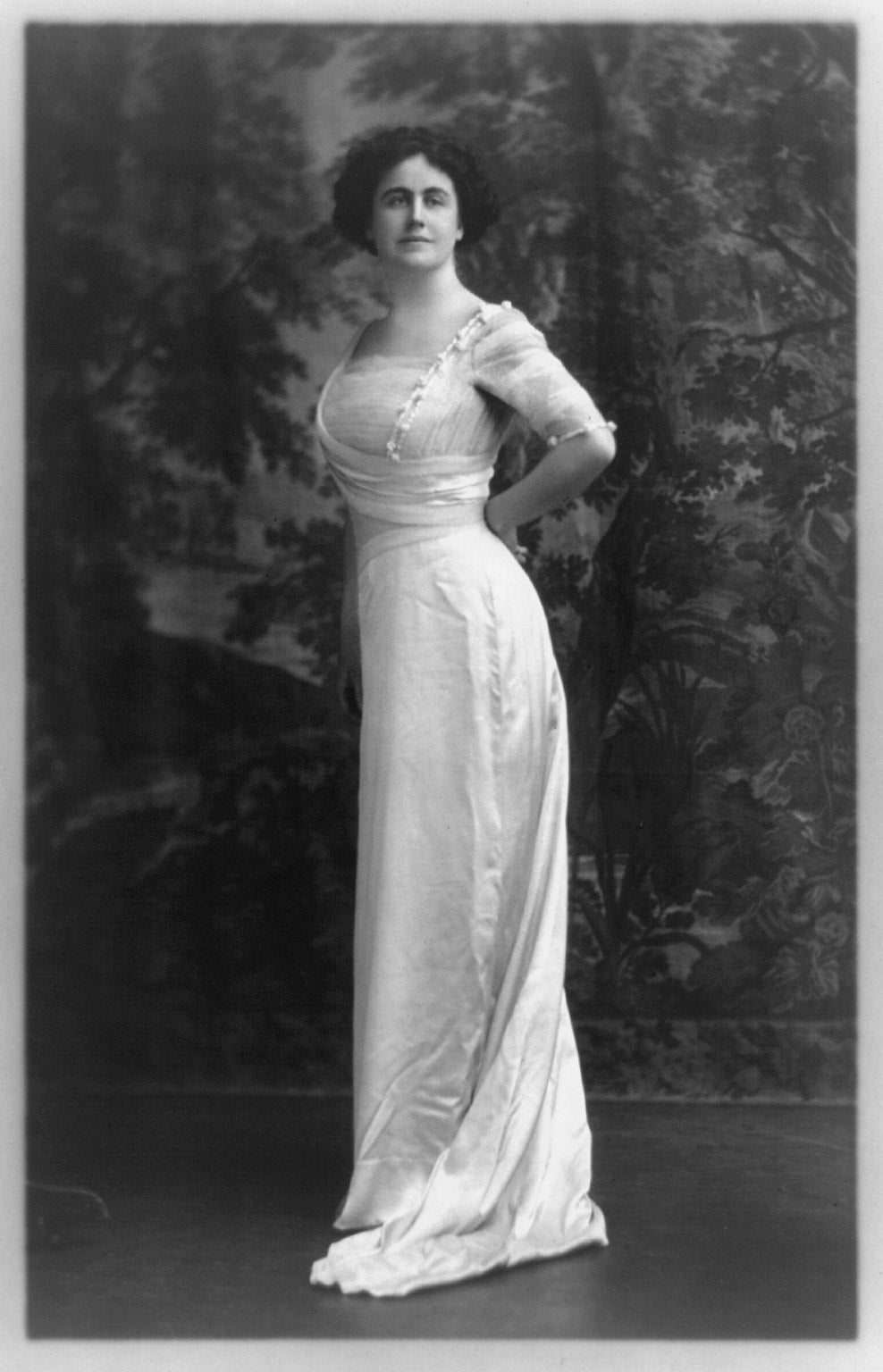
Edith Bolling Galt was outside near her 20th Street home in Dupont Circle one late winter day in 1915 when a friend of hers drove by. 1 She waved to Dr. Cary Grayson, who was riding in the President of the United State’s Pierce-Arrow, complete with presidential seals on the door and a Secret Service escort. Edith knew that Grayson was the President’s physician and the citizens of Washington were used to seeing the leader of the free world ride his regular routes through the city after the death of his wife in August 1914. She was pleased to notice a friend, but otherwise moved on with her day. 2
Unbeknownst to Edith though, she had not only caught the attention of Dr. Grayson, but of his charge as well. President Woodrow Wilson asked the physician, “Who is that beautiful lady?” 3
Edith herself had been widowed in 1908 by Norman Galt, a Washington jeweler who left behind his business. Edith had fallen in love with the “glamour” of the city as a teenager from small-town Wytheville, Virginia and she was not one to back down from a challenge. She “decided to continue the business” and stay in their home in the heart of Washington society. 4 Over the next six years, she saved the business from failure, stepping in at a time of crisis, learning what she needed to know, and sacrificing her own pay in order to keep the shop afloat. It would not be the last time this formidable woman took the reins when her husband was no longer able.
The President officially met his future bride upon returning from a game of golf with Dr. Grayson, who had encouraged him to take up the game as a form of exercise. Edith had been visiting Helen Bones, Woodrow’s cousin and a friend of his late wife. Following Ellen Wilson’s death, Helen had seemed adrift at the White House, and Dr. Grayson had asked his fiancé to find her a friend in Washington. She found Edith.
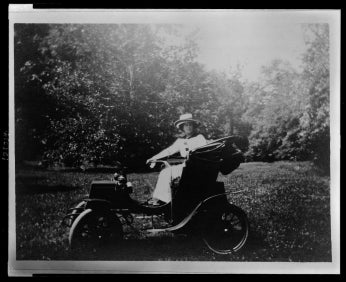
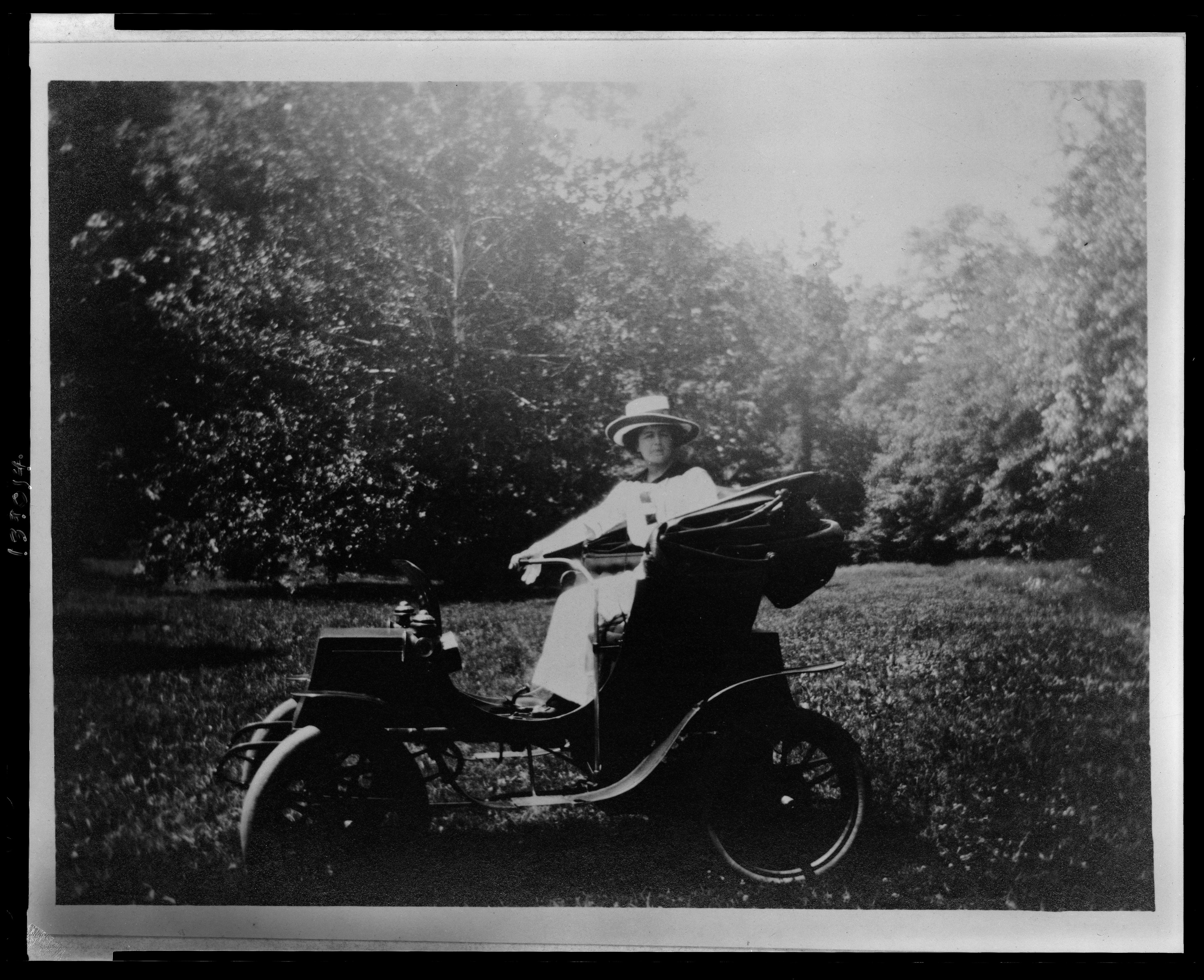
Helen and Edith had just returned from a “long tramp” which left their boots disgracefully muddy. It did not matter though - the men were in much worse shape, having just returned from their game. Once everyone had cleaned up, the four of them came back together for tea. 5
Edith and Woodrow’s courtship was fast and intense, at least on Woodrow’s side. Letters flew between the White House and 20th Street (often in Helen’s discreet hands) and soon, Woodrow had a private phone line installed. 6 The new couple could talk about anything and everything, but what they spilled the most ink discussing (besides their undying affection for one another) was politics. From the outset, Woodrow asked Edith’s opinion on the ongoing war, speeches he was to make, and relationships with politicians of both parties. Edith was happy to give it.
But when Woodrow professed his love and begged Edith to marry him only two months after their first official meeting, Edith balked. “I told him if it had to be yes or no at once, it would have to be no.” She convinced him to give her more time, especially as she faced the daunting prospect of marrying directly into the office of First Lady of the United States. 7 Though Edith lived in the middle of the nation’s society, she rarely chose to participate in it. A marriage to Woodrow would launch her into the public eye in a way she did not especially relish.
By October though, papers across the nation got their hands on Edith when the couple announced their engagement and in December, journalists informed the reading public that “Wedding of President Wilson and Mrs. Galt Will Be Family Affair.” 8 The pair were married in Edith’s house out of deference to her desire to stay out of the spotlight until she absolutely had to enter it. When that time came though, she was ready.
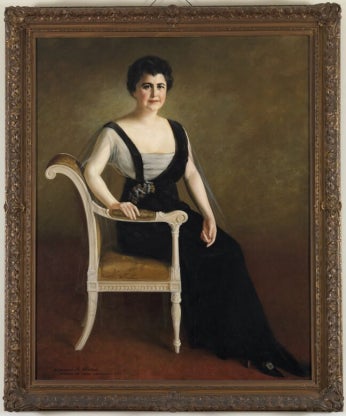
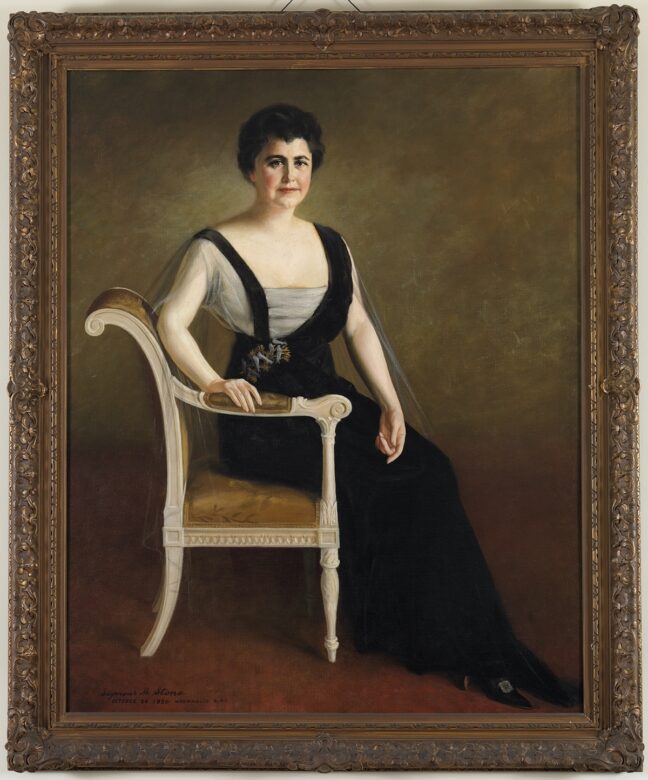
The first few years of the Wilsons’ marriage, Edith was the model wife and First Lady. Her role, both in public and private, was to support her husband. When the United States formally entered the World War raging across Europe, Edith “needed no one to tell me what my most important war-work would be.” 9 The President’s health was to be her responsibility, as it seemed Wilson himself had little concern for it in the midst of the worries of running a country at war. Edith consulted with his physician.
“Talking the matter over with Dr. Grayson, I was told by him that the President should have some new form of exercise to supplement his golf…Accordingly I said to my husband that I would like to take up horseback riding…Results tumbled upon me quicker than I had anticipated when, the next afternoon, I was bidden to be ready to ride at five o’clock with Dr. Grayson and my husband.” 10
Edith kept a careful eye on Woodrow’s health throughout the war, often utilizing her knowledge of Woodrow and her own cunning to trick him into exercise and other healthy habits he was prone to neglect. When the firing stopped, she accompanied him to Paris for the negotiation of the peace treaties. Wilson managed to push through a plan for the League of Nations; the challenge would be getting his own country to sign. Unfortunately though, Woodrow’s health, which had begun to deteriorate over the past few years, was now creeping closer to failure. Headaches and exhaustion plagued him night and day and the incessant pace of the work did his ailing body no favors.
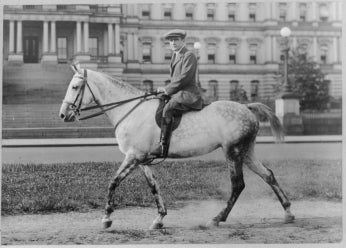
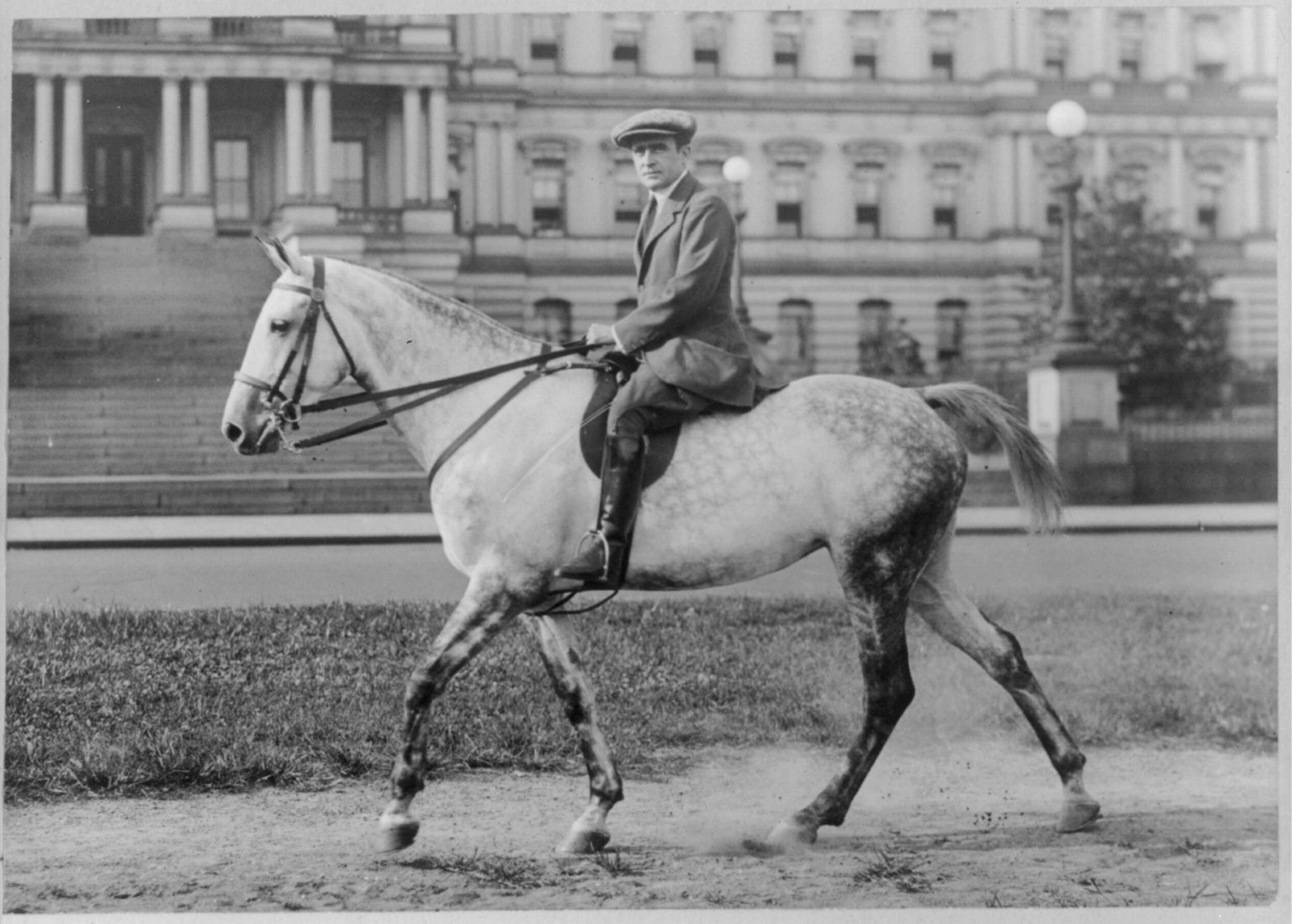
Upon their return to America, Woodrow planned to set out on a train tour of the country to make speeches and campaign for his League of Nations plan and the Treaty of Versailles. He would need as much support as he could muster to get it through Congress. Edith and Dr. Grayson vehemently opposed the trip “for the sake of his health” but Wilson insisted. Both caregivers accompanied him on what turned out to be for the president, “a prolonged agony of physical pain; for Mrs. Wilson and [Dr. Grayson] an unceasing agony of anxiety.” 11
As the journey went on, Wilson became more and more ill. Migraines kept him from sleeping and the strain was becoming visible even on his better days. By the time the train reached Wichita, Kansas, he could not go on. Dr. Grayson ordered him to return to Washington for complete rest. The command did not come soon enough though: just days after Edith and Woodrow’s return to the White House, Wilson suffered his infamous stroke. 12
From that point on, nothing would ever be the same for the stoic president. Or for Edith. Even on their long journey home from Wichita, she saw her future looming and determined to face it head on. “As I sat there watching the dawn break slowly I felt that life would never be the same; that something had broken inside me; and from that hour on I would have to wear a mask - not only to the public but to the one I loved best in the world; for he must never know how ill he was, and I must carry on.” 13
The doctors all agreed that Wilson ought to be allowed to maintain his role as much as his condition would allow. To take the presidency from him would probably kill him. In practice, that meant that Edith would serve as checkpoint between all of the responsibilities of the leader of the United States and her invalid husband, lively in spirit but unable even to rise from bed.
Wilson’s team of doctors grew and they looked to Edith to make decisions regarding his health, both physical and mental. One, Dr. Dercum, gave her the instructions under which she operated for the rest of her husband’s time in office.
“Madam, it is a grave situation, but I think you can solve it. Have everything come to you; weigh the importance of each matter, and see if it is possible by consultations with the respective heads of the Departments to solve them without the guidance of your husband. In this way you can save him a great deal. But always keep in mind that every time you take him a new anxiety or problem to excite him, you are turning a knife in an open wound. His nerves are crying out for rest, and any excitement is torture to him.” 14
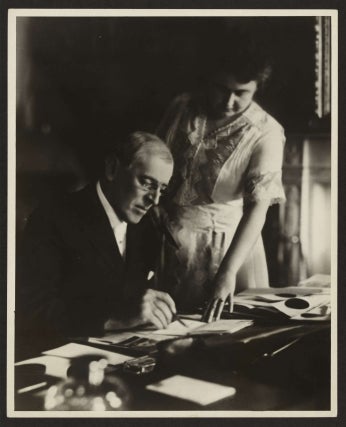
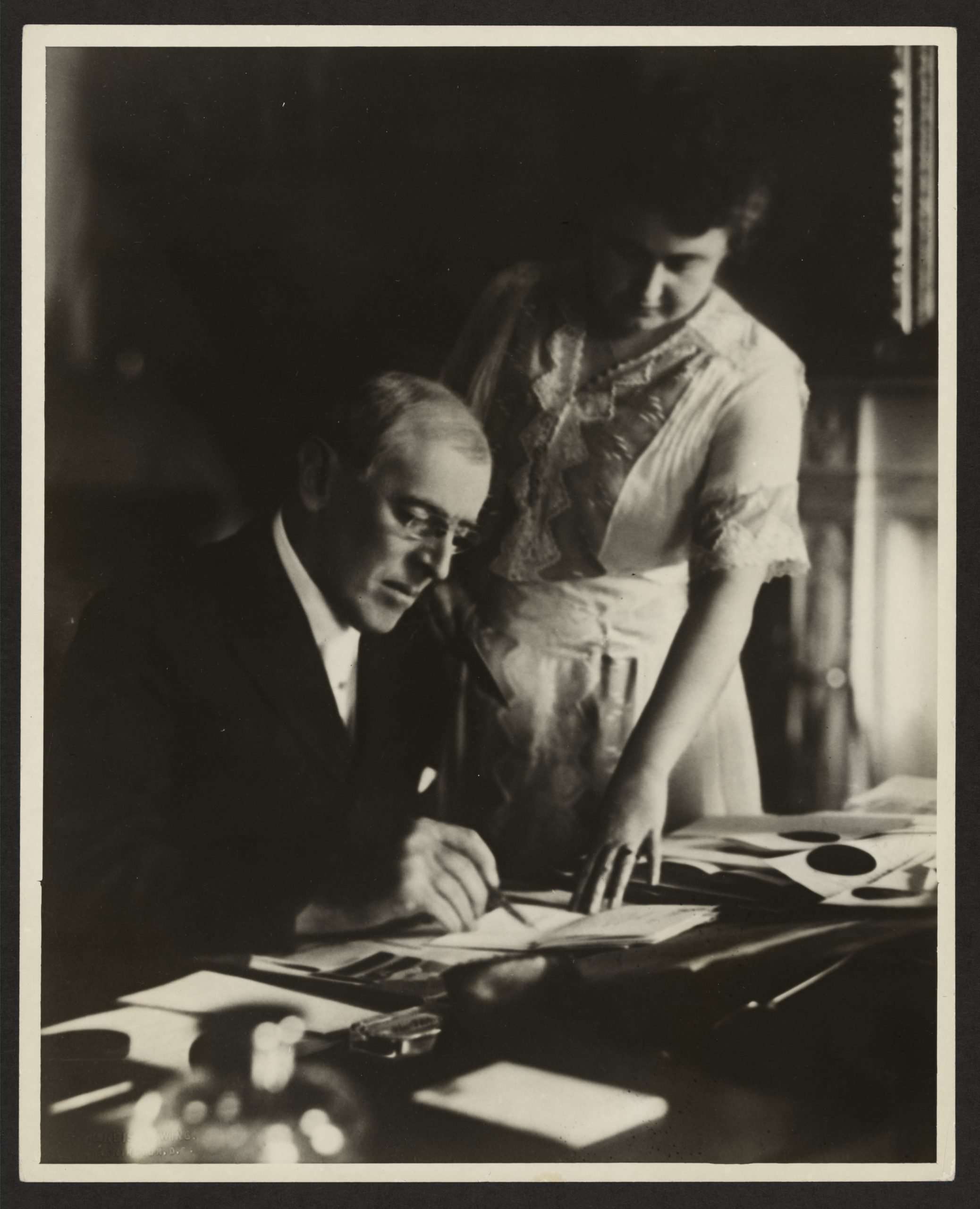
It was enough pressure to make anyone crack. Wilson still wanted to work. The doctors wanted him on full rest. Politicians wanted to consult on international affairs. The public wanted answers. And Edith just wanted to care for her sick husband.
But Edith was not new to high-pressure situations and being thrust into new roles. She gathered her courage, her strength, and every scrap of political wisdom she had accumulated since the beginning of her courtship with Wilson, and she set to work.
As the Senate debated the Treaty of Versailles and the League of Nations, Edith tried to encourage Wilson to give in to some of the opposition’s proposed amendments. He refused. Faithful to her husband, she met with Gilbert Hitchcock, a Democratic Senator from Nebraska. She told him to instruct all loyal Democrats to refuse the amendments. The Treaty was voted down. 15 When Edith informed Woodrow of the defeat, he took it well. “All the more reason I must get well and try again to bring this country to a sense of its great opportunity and greater responsibility,” he said. 16
But he did not get well, and Edith continued to meet with anyone who needed to see the President, picking and choosing what and who might be allowed through to his sickroom. She felt barraged by politicians, journalists, and diplomats. “Upon all sides I was literally besieged by those who ‘must’ see the President. But I carried out the directions of the doctors - and my heart was in it. Woodrow Wilson was first my beloved husband whose life I was trying to save, fighting with my back to the wall - after that he was the President of the United States.” 17
Though Edith wrote in her memoir that she “never made a single decision regarding the disposition of public affairs,” it is not difficult to argue that she did indeed take a turn as President of the United States herself. 18 The very nature of her task - deciding what ought to be brought to Wilson and what should be handled without him - meant that Edith’s opinions were written into some of the largest decisions made in American politics from September 1919 to March 1921, when Warren Harding took office.
Wilson never got better, passing away in 1924, and Edith never gave up on him. For the rest of her life, she attended events in his honor, received awards in his stead, and even wrote her memoir on the subject of her husband. Though Edith lived until 1961, the last page of her book ends with her husband’s death and a dedication to his memory. When Edith finally left this earth, she did so on December 28th, Woodrow Wilson’s birthday.
Footnotes
- 1
Edwin Tribble, ed., A President in Love: The Courtship Letters of Woodrow Wilson and Edith Bolling Galt (Houghton Mifflin, 1981) xiv.
- 2
Rebecca Boggs Roberts, Untold Power: The Fascinating Rise and Complex Legacy of First Lady Edith Wilson (Viking, 2023), 71–72.
- 3
Cary T. Grayson, Woodrow Wilson: An Intimate Memoir (1960; Potomac Books, 1977), 50.
- 4
Tribble, A President in Love, xiv; Edith Bolling Wilson, My Memoir (The Bobbs-Merrill Company, 1938), 4, 22.
- 5
Wilson, My Memoir, 56.
- 6
Wilson, My Memoir, 81.
- 7
Wilson, My Memoir, 61.
- 8
“Wedding of President Wilson and Mrs. Galt Will Be Family Affair,” The Raymer Enterprise (New Raymer, Colorado), December 16, 1915, 2.
- 9
Wilson, My Memoir, 134.
- 10
Wilson, My Memoir, 134–35.
- 11
Grayson, Woodrow Wilson, 96.
- 12
Wilson, My Memoir, 286–87.
- 13
Wilson, My Memoir, 284.
- 14
Wilson, My Memoir, 289.
- 15
Roberts, Untold Power, 180–81.
- 16
Wilson, My Memoir, 297.
- 17
Wilson, My Memoir, 290.
- 18
Wilson, My Memoir, 289.
![Sketch of the mythical fuan by Pearson Scott Foresman. [Source: Wikipedia]](/sites/default/files/styles/crop_320x320/public/2023-10/Goatman_Wikipedia_Faun_2_%28PSF%29.png?h=64a074ff&itok=C9Qh-PE1)