Abraham Lincoln’s Basement Offers a Glimpse Into the Past
Much like an iceberg, a large part of the Lincoln Memorial is invisible at first glance. While the monument rises in a flourish of white Doric columns aboveground, that quite literally isn’t even the half of it. The rest of America’s tribute to Lincoln lies beneath the surface. Visitors used to be able to descend into its cavernous depths — and soon will again.
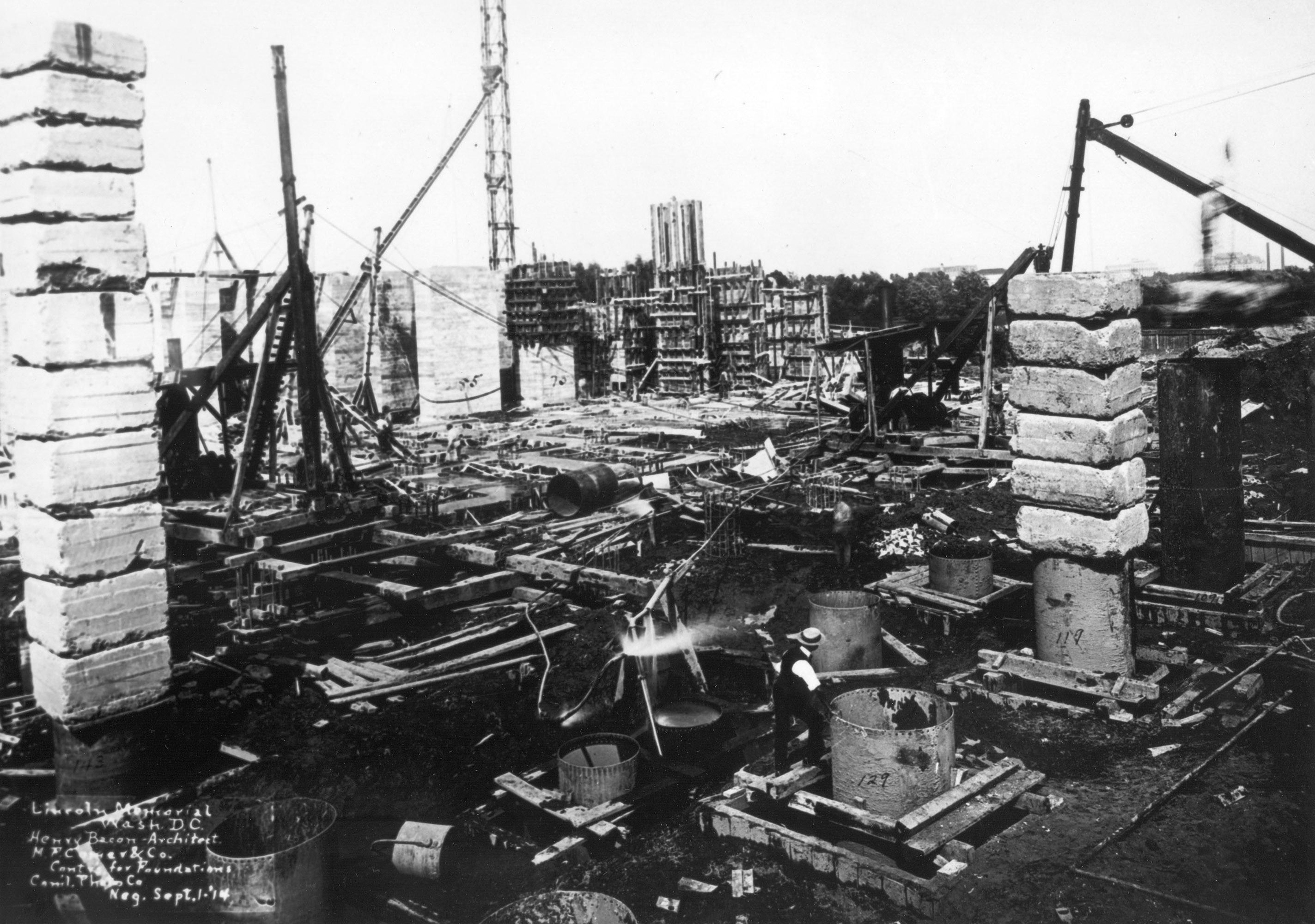
The architects and engineers who built the Lincoln Memorial were faced with a serious problem even before ground could be broken. The land at the end of the Mall—Potomac Flats—had only recently been reclaimed from a marsh, filled in with mud from the Potomac River in a project that had taken the Army Corps of Engineers 40 years to complete. The area was “foul-smelling” and “infamous” for mosquitoes, but also difficult land to build on.
It was not popular, and not the only choice of site. Illinois congressman Joe Cannon had gone so far as to say he would “never let a memorial to Abraham Lincoln be built in that goddamn swamp.”” 1
But Potomac Flats ended up being the Lincoln Memorial’s home—and presenting a challenging engineering problem. To keep the structure from sinking into the mud beneath its thousands of tons of marble, construction crews had to dig a deep foundation so that the 122 cement columns supporting the monument above would rest on stone.
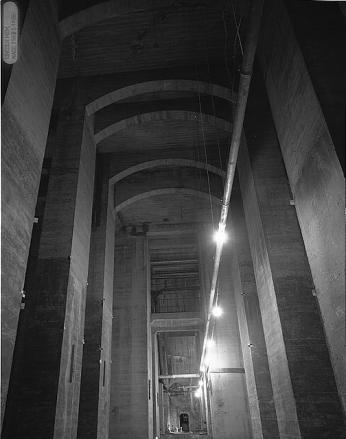
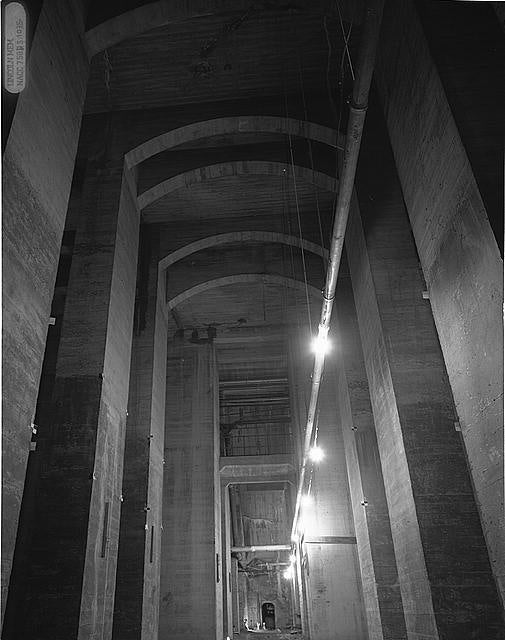
The columns were lined with steel reinforcing rods anchored into the bedrock. This was the sub-foundation. The upper foundation was comprised of a second set of piers sitting atop the primary columns. Those were joined together by arches of concrete that formed the base of the marble floor the Memorial’s visitors would see. 2
The result was a secret basement—called an undercroft—that looked like “a cavern of cement and steel,” with the piers towering above the floor “like flying buttresses in a medieval cathedral.” 3 But the 43,000-square-foot undercroft was quickly forgotten about as construction above ground got underway. As the marble temple rose to almost 80 feet above ground, few gave much thought about what lay beneath their feet.
But during preparations for America’s Bicentennial in the mid 1970s, that changed. While renovating the Memorial’s bathrooms, workers broke through the floor and discovered that the undercroft had developed a little life of its own. A tiny ecosystem of spiders, moths, and other insects lived in darkness among the tools, caps, and boots left behind by the workers who had finished the basement in 1915. Meanwhile, thousands of stalactites – formed from rainwater seeping through the stone structure and picking up minerals – dripped in the dark. Known as “soda straws” because they were hollow, thin, and brittle, some had grown over nine feet long. Spattered over the ground were young stalagmites in the shape of “fried eggs.” Older formations rose through the dark like “castles in the sand.” 4
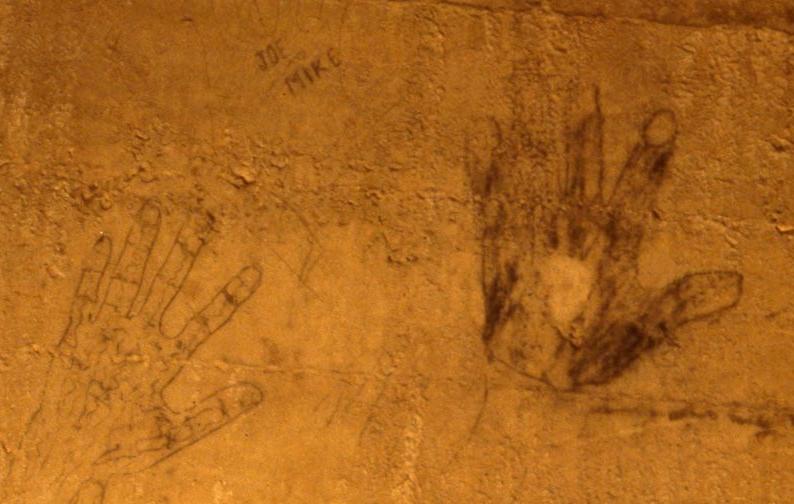
There were – quite literally—the marks of humans, too. On the concrete pilings of the undercroft was a myriad of graffiti. There were over two dozen drawings perfectly preserved in the dark. Workers had doodled everything from tic-tac-toe boards to comic strip characters to little dogs with wagging tails. A glamorous lady with curly hair puffing on a cigarette was thought to be modeled on actress Gloria Swanson. 5
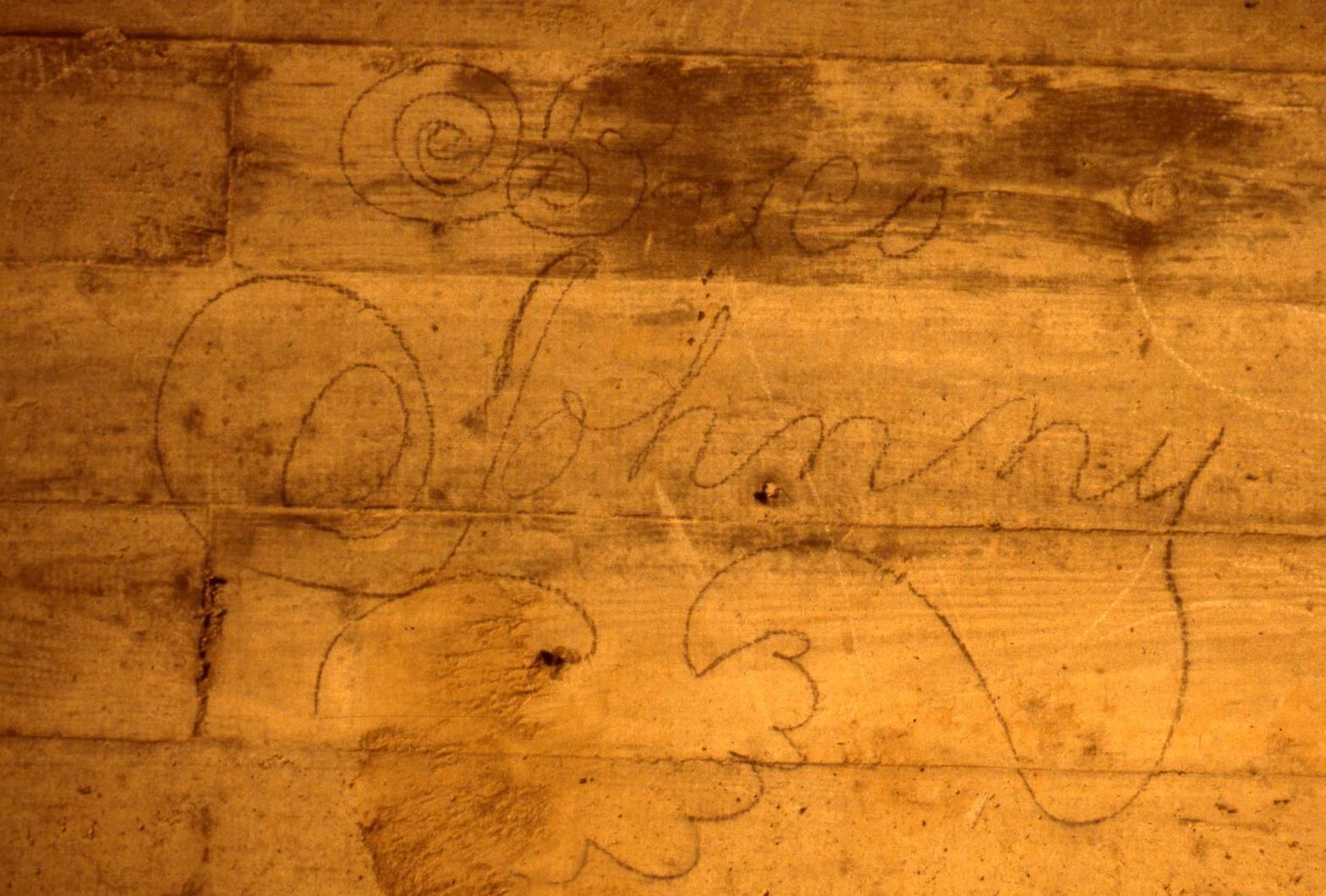
Even today, very little is known about the workers who drew the graffiti. They were likely employed by M.F. Comer and Co. or the National Foundation and Engineering Company, the two companies who were awarded construction contracts. 6 Almost no identifying information remains, but one worker scrawled an address on the wall (“3051 N. Clark St.”). One “Bosco Johnny” left his signature, and two workers signed their names under outlines of their hands: Joe and Mike. 7
“You can envision these workers on a coffee break or having lunch; there’s some old charcoal sitting around and they just start doodling on the foundations,” Mike Litterst, Chief of Communications for the National Mall told a camera crew in 2016. 8 The construction workers certainly had “no idea that more than a century later we’d be down taking a look at them.”
Of course, the workers were not only “decent cartoonists,” but also successfully tackling a very complicated piece of construction. Park workers also found math equations scribbled on the foundation pilings. They were likely the work of engineers “getting ready to pour concrete or measure distances.” 9
Of course: why bother with a pencil and paper if you can just scribble over a wall no one will see?
In 1976, the National Park Service installed a new elevator for handicapped access to the memorial. It loaded from the lower level and park official Leroy Rowell suggested putting “a window in the wall to show tourists the huge underground cavern.” 10 Interests were piqued and a few trial runs convinced administrators that tours through the undercroft were a viable opportunity. The Lincoln Memorial began offering them on Wednesday and Thursday nights.
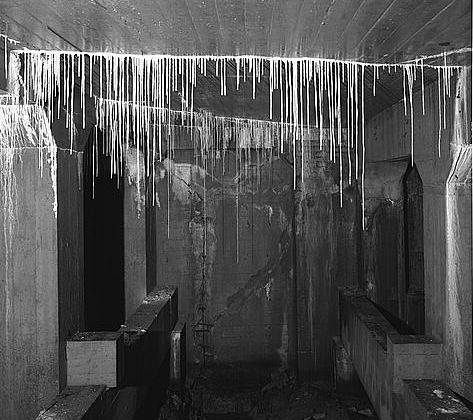
The Washington Post sent reporter Paul Hodge down in 1977 on a trip that was “not… for the aged or handicapped.” A park ranger led fifteen visitors armed with flashlights on a mildly perilous tour: Hodge reported that “about 50 three-foot, cement-encased steel beams must be clambered over in dark, dank, 80-degree heat in order to see stalactites and stalagmites beneath the plaza facing the Reflecting Pool.”
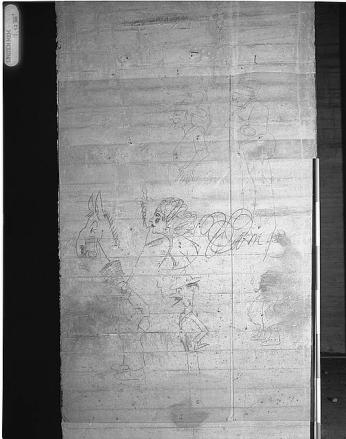
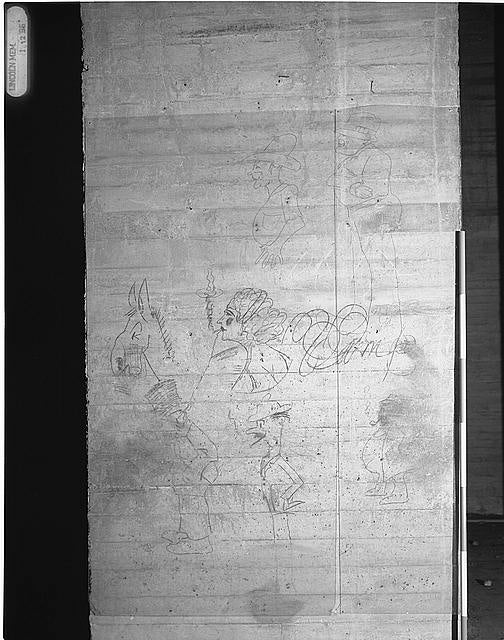
Their tour guide explained the unlikely success of the undercroft and the Monument’s engineering, and proceeded to show off the workmen’s other form of artistry. He led them to a “lovely drawing in top hat and cigarette holder” meant to be President Woodrow Wilson.
Tour groups saw doodles identified as President Taft (chairman of the Memorial Commission) and Henry Bacon (the Monument’s architect). Guides also pointed out a portly man with a pipe and a dour expression, the only caricature to appear multiple times: “We think [he] is the construction foreman.” 11
Unfortunately, the underground tours were a short-lived wonder. In 1989, they stopped after testing revealed asbestos in the lining of basement pipes and a “negligible” amount in the air of the undercroft.
“No visitor gets anywhere near the asbestos,” Don Wadase, NPS Capital Region Chief of Resource Management told The Washington Post in 1990. “It’s all sealed off.” 12
But with that, they had also sealed off a gem of D.C. archeology, a veritable time capsule that could allow visitors to experience the Lincoln Memorial with one foot in the present, and another in the past. The sketches, stalactites, and spiders were once again shuttered away into darkness.
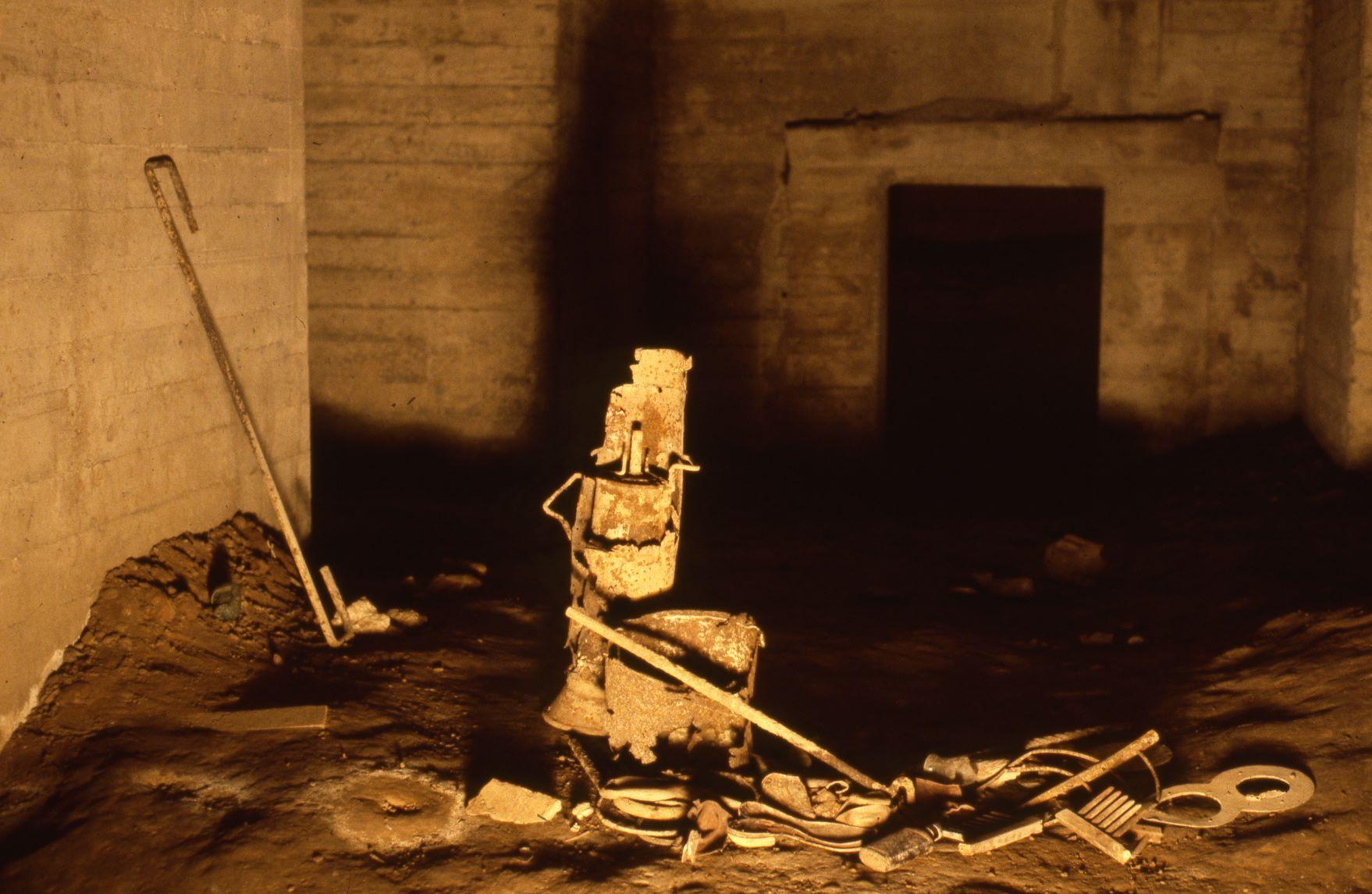
Fortunately for us, that is all about to change (again). For the last several years, the National Park Service has been working on transforming the cavernous undercroft into an exhibit space. The $69 million project, 13 which began in March of 2023, is nearing completion and is set to open on June 25, 2026—in time for the nation’s 250th birthday celebration.
The new “immersive museum” will have 15,000 square feet of exhibition space where visitors can explore “how the memorial was built, how it has shaped Americans’ understanding of Abraham Lincoln, and how its meaning has evolved for generations who have gathered there,” 14 according to a statement by the Department of the Interior and the National Park Foundation.
So, the next time you’re entertaining out of town guests with a trip around the D.C. monuments, make sure you leave time for a visit to Lincoln’s basement!
For photos of the Lincoln Memorial Undercoft project, visit the National Park Service website.
Footnotes
- 1 The Attic. “The Lincoln Memorial -- America’s Peace Platform Turns 100.” The Attic, May 26, 2022. https://www.theattic.space/home-page-blogs/2022/5/26/americas-peace-platform.
- 2 Lincoln Memorial (U.S. National Park Service). “Construction of the Lincoln Memorial,” May 18, 2021. https://www.nps.gov/linc/learn/historyculture/lincoln-memorial-construction.htm.
- 3 Hodge, Paul. “What’s Afoot Under Abe Lincoln’s Feet?” The Washington Post, October 27, 1977. https://www.washingtonpost.com/archive/local/1977/10/27/whats-afoot-under-abe-lincolns-feet/f48997a6-1f6a-466d-b3fe-2b9ad2db4532/.
- 4 Hodge, Paul. “What’s Afoot Under Abe Lincoln’s Feet?” The Washington Post, October 27, 1977. https://www.washingtonpost.com/archive/local/1977/10/27/whats-afoot-under-abe-lincolns-feet/f48997a6-1f6a-466d-b3fe-2b9ad2db4532/.
- 5 Orlando Sentinel. “Rarest Side of Lincoln Is Underfoot,” February 12, 1990. https://www.orlandosentinel.com/1990/02/12/rarest-side-of-lincoln-is-underfoot/.
- 6
US Department of the Interior, Lincoln Memorial, Donal C. Pfanz. National Register of Historic Places Inventory –Nomination Form, 5 February, 1981. https://npgallery.nps.gov/NRHP/GetAsset/ac50ccbf-a500-412c-a7b4-79fe21256e68?branding=NRHP
- 7
National Park Service. “Lincoln Memorial Gallery Item Display.” U.S. National Park Service, 1984. https://www.nps.gov/media/photo/gallery-item.htm?id=2ba5c3a8-49dc-4b3b-ac2e-aa29874bc392&gid=78836A94-4D9C-4CE9-A44F-530E8961222D.
- 8
Riviera, Gloria, and Janet Weinstein. “Take a ‘Historic Graffiti’ Tour Under the Lincoln Memorial.” ABC News, September 1, 2016. https://abcnews.go.com/US/historic-graffiti-tour-lincoln-memorial/story?id=41805221.
- 9
Riviera, Gloria, and Janet Weinstein. “Take a ‘Historic Graffiti’ Tour Under the Lincoln Memorial.” ABC News, September 1, 2016. https://abcnews.go.com/US/historic-graffiti-tour-lincoln-memorial/story?id=41805221.
- 10
Hodge, Paul. “What’s Afoot Under Abe Lincoln’s Feet?” The Washington Post, October 27, 1977. https://www.washingtonpost.com/archive/local/1977/10/27/whats-afoot-under-abe-lincolns-feet/f48997a6-1f6a-466d-b3fe-2b9ad2db4532/.
- 11
Hodge, Paul. “What’s Afoot Under Abe Lincoln’s Feet?” The Washington Post, October 27, 1977. https://www.washingtonpost.com/archive/local/1977/10/27/whats-afoot-under-abe-lincolns-feet/f48997a6-1f6a-466d-b3fe-2b9ad2db4532/.
- 12
Twomey, Steve. “Monuments Losing Battle with Erosion.” The Washington Post, April 9, 1990. https://www.washingtonpost.com/archive/local/1990/04/09/monuments-losing-battle-with-erosion/1c59551e-bdc4-4c0c-9cf7-47e51c74da7c/.
- 13
National Park Service, "Expanded Exhibit Space at the Lincoln Memorial," accessed May 21, 2026, https://www.nps.gov/wamo/planyourvisit/undercroft.htm.
- 14
"The Department of the Interior and National Park Foundation Announce Opening of Lincoln Memorial Undercroft," Department of Interior press release, May 20, 2026, https://nationalmall.org/content/new-lincoln-memorial-undercroft-to-open-june-25.

![Sketch of the mythical fuan by Pearson Scott Foresman. [Source: Wikipedia]](/sites/default/files/styles/crop_320x320/public/2023-10/Goatman_Wikipedia_Faun_2_%28PSF%29.png?h=64a074ff&itok=C9Qh-PE1)