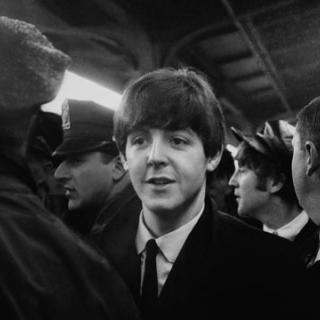
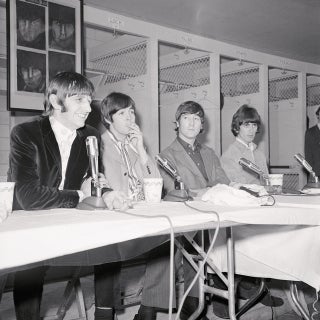
It's hard to imagine that anyone would think the Beatles might not be a big enough concert draw. But when Harry G. Lynn, owner of the old Washington Coliseum at 3rd and M streets NE, was approached by local radio station WWDC in late 1963 about the possibility of booking the then-nascent British pop music sensations for their debut U.S. concert on Feb. 11, 1964, he wasn't convinced that he would be able to sell the 8,000-plus tickets that it would take to fill his arena.
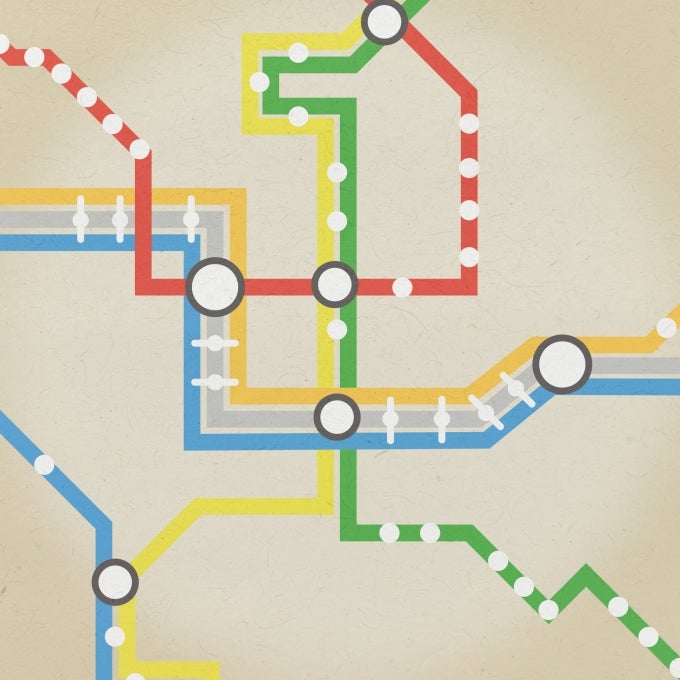
On January 28, 1962, Washington's original streetcar system road the rails for the final time. That last run ended 99 and a half years of service to the nation's capital as buses replaced the trolleys as the primary means of mass transit in the District. So, how did we get to that point?
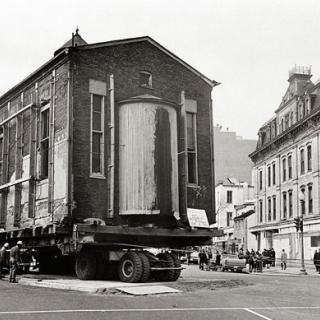
As many realtors will tell you, the first three rules of real estate are, “location, location, location.” Well, in the late 1960s, location presented a very serious problem for transit planners and the congregation of the Adas Israel synagogue. Construction of Metro’s Red Line was getting underway and WMATA had acquired the block bounded by 5th, 6th, F and G Streets, NW to serve as a staging area and, eventually, the home of Metro’s headquarters. There was only one problem. The block was also the home of Washington’s first synagogue building, which had been standing on the site since 1876.
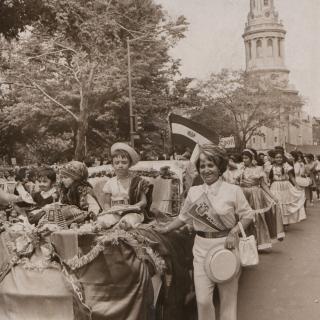
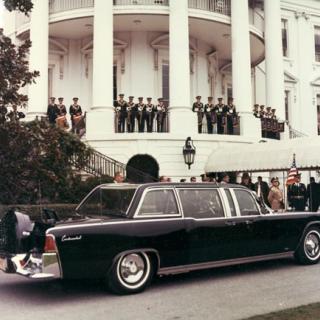
On Oct. 5, 1964 President Lyndon B. Johnson and visiting Philippines President Diosdado Macapagal rode a 25-minute noontime parade through downtown Washington. It was an unremarkable presidential event except for one unsettling detail: the car in which they rode was the same customized black 1961 Lincoln in which President John F. Kennedy had been killed less than a year earlier.
The American Masters documentary "Jimi Hendrix: Hear My Train A Comin," includes never-before-aired film footage of a live Hendrix performance at the 1968 Miami Pop Festival, as well as a poignant clip of his final performance in Germany in September 1970, just 12 days before his death at age 27. Unlike the Miami show, rock music archivists have yet to discover any film record of the legendary guitarist's three performances in the Washington, D.C. area in 1967 and 1968, but those shows have become the stuff of local legend.
Though he was the grandson of a Klansman, Bob Zellner realized at a young age that he didn't agree with segregation. As a young man, he joined the Student Nonviolent Coordinating Committee (SNCC), and became the first white southerner to be a SNCC Field Secretary. In a time of high tensions, particularly in the Deep South, Zellner and his wife Dorothy held their ground as supporters of black freedom and desegregation. They traveled from Danville, Virginia for the March on Washington. Years later, Zellner remembered the experience.
On the days leading up to the March on Washington, buses from every direction poured into the District of Columbia. Culie Vick Kilimanjaro and her husband John Marshall Kilimanjaro came from Greensboro, North Carolina. No one knew exactly what to expect prior to the March. Many feared violence. Many feared that no one would show up and the March would be a bust.
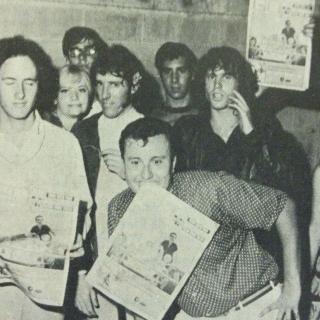
On August 18, 1967, the Doors played a D.C. area double-header: a 7:30pm show at the National Guard Armory in Annapolis, Maryland, and a late night show at the Alexandria Roller Rink Arena in Alexandria, Virginia. It was a homecoming of sorts for front man Jim Morrison but the night would end poorly.
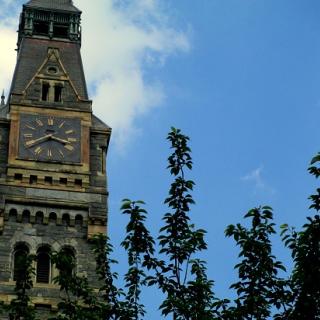
For decades Georgetown University students have plotted daring night raids on Healy Hall, removing the clock’s hands as a prank that spawned nicknamed crews, secret hideouts, and tall tales. Administration fines and alarms haven’t stopped the tradition. Every few years, it seems, the clock goes quiet and a new heist becomes campus legend.
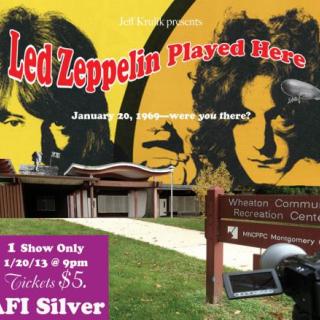
Rumor has it that Led Zeppelin's first live show in the DC area was at the Wheaton Youth Center — a nondescript gymnasium in a Maryland suburb on January 20, 1969, in front of 50 confused teens. But there are no photos, articles or a paper trail of any sort to prove it. Surely this must be an urban legend. Or is it? Local filmmaker Jeff Krulik has spent 5 years trying to find out.


![Sketch of the mythical fuan by Pearson Scott Foresman. [Source: Wikipedia]](/sites/default/files/styles/crop_320x320/public/2023-10/Goatman_Wikipedia_Faun_2_%28PSF%29.png?h=64a074ff&itok=C9Qh-PE1)

![Ben's Chili Bowl, 1980 (Photo Source: Library of Congress) Highsmith, Carol M, photographer. Ben's Chili Bowl, Washington, D.C. United States Washington D.C, None. [Between 1980 and 2006] Photograph. Retrieved from the Library of Congress, https://www.loc.gov/item/2011635251/. (Accessed December 04, 2017.)](/sites/default/files/styles/crop_320x320/public/17058v.jpg?itok=egZM-IR9 "Ben's Chili Bowl, 1980 (Photo Source: Library of Congress) Highsmith, Carol M, photographer. Ben's Chili Bowl, Washington, D.C. United States Washington D.C, None. [Between 1980 and 2006] Photograph. Retrieved from the Library of Congress, https://www.loc.gov/item/2011635251/. (Accessed December 04, 2017.)")