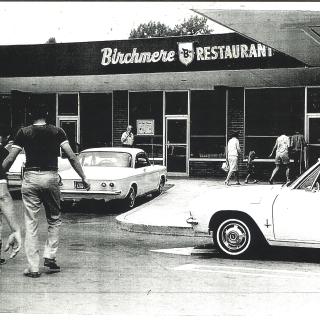
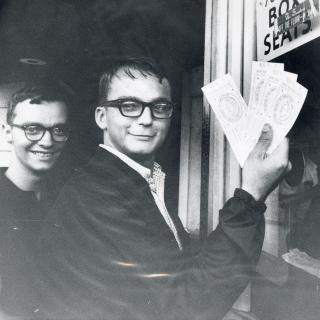
Gary Oelze purchased a Shirlington restaurant called the Birchmere in the mid 1960s. At the time, he wasn't planning to get into the music business. But soon, the Birchmere became a hub for bluegrass music in the nation's capital. Today, it is an internationally renowned music hall that draws fans of every musical genre.
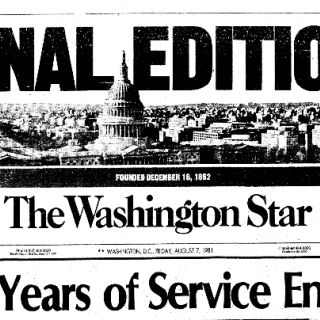
“There is a great silence today in Washington. A fine newspaper is gone and a noble tradition ended.”
Ronald Reagan’s words appeared on the front page of the August 7, 1981, issue of the Washington Evening Star. The biggest piece of news that day was the end of a 128-year-old Washington institution—the story of the newspaper’s own demise.
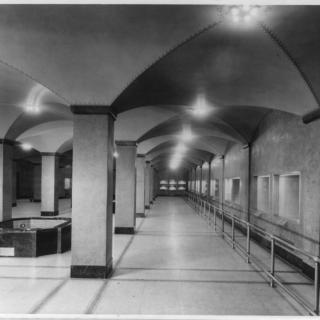
Since opening in 1981, the National Aquarium in Baltimore has proved a popular tourist destination, an educational excursion, and a great refuge from the heat in summer months. Many people don’t know, however, that there was a smaller, more modest National Aquarium in D.C. for years before the one in Baltimore popped up.
It takes a lot of talent to design a city, especially one with such sweeping vistas and wide, radial streets as our Nation’s Capital. It’s hard not to admire the vision of Major Pierre Charles L’Enfant, the engineer behind Washington, D.C. But everybody makes mistakes—even visionaries— and L’Enfant was certainly no exception.
His biggest blunder was probably tearing down the house of his boss’s nephew.
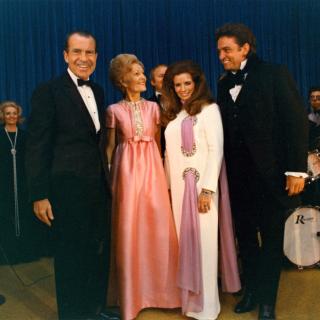
April 17, 1970 was a big day for the United States—President Richard Nixon even described it as the “proudest day of [his] life and in the life of the country.” That afternoon, the ill-fated Apollo 13 crew splashed down in the Pacific Ocean and made it to safety. The nation breathed a collective sigh of relief.
But the day wasn’t over yet. That evening, President Nixon would sit in the East Room of the White House for another cultural milestone: a legendary performance by country music star Johnny Cash.
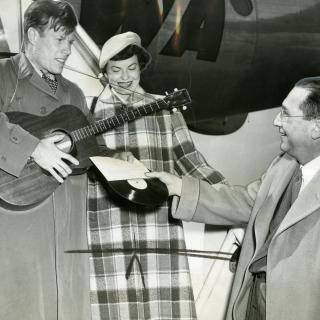
What songs come to mind when you think of Washington, D.C.? Maybe Go-go music, or patriotic Sousa marches? Then of course there’s the “official” song, that instantly recognizable classic— “Washington,” by Jimmie Dodd (Yes, the composer is the same grown man who went on to lead the Mouseketeers in the original “Mickey Mouse Club” in 1955).
Doesn’t ring a bell? Don’t worry, you’re not alone.
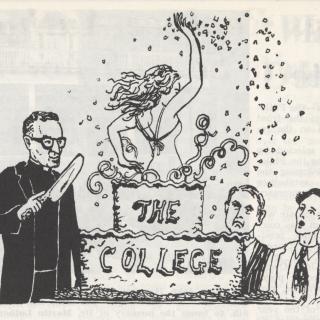
“They’ll admit women to the College over my dead body!”
When the Georgetown University Board of Directors announced big changes coming to campus in 1969, at least one Jesuit priest was clearly not thrilled. Perhaps he had just read the headline: “Georgetown Breaks Tradition, Allows Women into the College of Arts and Sciences.” Perhaps he had not heard the rumors that his university needed money, and would be increasing its enrollment rate in the coming years. Perhaps he had neglected to look outside the window of his office and notice that women had been walking across Georgetown’s campus for many years already.
Washington, D.C. hosted the 1969 All-Star game at RFK stadium. It was a thrilling event that drew baseball fans together to watch the greats of the MLB, including hometown hero Frank Howard, go head-to-head. But the game also made history as the first, and only, All-Star game to be postponed due to weather. A torrential rain storm disrupted the city's plans, but that didn't stop more than 45,000 fans from coming out to RFK the next afternoon.
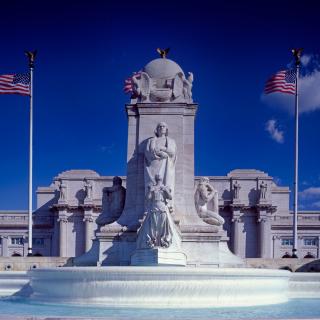
In the early 1960s, the Evening Star called the Columbus Circle fountain in front of Union Station “a ready made swimming pool with ledges, platforms, and friendly statues. It is a grand place to wrestle and splash during the heat of the day, to get the shivers, and to finally recapture the heat by stretching full length on the warm bricks of the surrounding walk. Columbus looks on — pleased and noble.” However, as inviting as it was, swimming in the fountain was technically against Park Police regulations ... which made it the perfectplace to protest Washington’s shortage of accessible swimming pools.
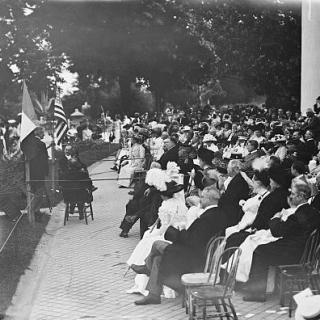
On April 28, 1909, a funeral procession nearly a mile long paraded down Pennsylvania Avenue and M Street, complete with fine carriages and a military escort. Throughout Washington, D.C., flags were displayed at half mast, spectators lined the streets, and school children were allowed a break from their studies to glimpse out the window and see it pass by. The man they were there to honor was Major Pierre Charles L’Enfant… who died in 1825.
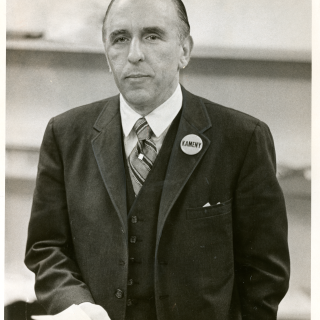
You might be familiar with the Red Scare, Senator Joseph McCarthy's efforts to remove suspected communists from the U.S. State Department. But what about the Lavender Scare? Starting in the 1940s, government officials began firing thousands of employees based on their sexual orientation. Frank Kameny, a Harvard-educated astronomer was one of them. He lost his job in 1957 and challenged the dismissal all the way to the Supreme Court.


![Sketch of the mythical fuan by Pearson Scott Foresman. [Source: Wikipedia]](/sites/default/files/styles/crop_320x320/public/2023-10/Goatman_Wikipedia_Faun_2_%28PSF%29.png?h=64a074ff&itok=C9Qh-PE1)

![Ben's Chili Bowl, 1980 (Photo Source: Library of Congress) Highsmith, Carol M, photographer. Ben's Chili Bowl, Washington, D.C. United States Washington D.C, None. [Between 1980 and 2006] Photograph. Retrieved from the Library of Congress, https://www.loc.gov/item/2011635251/. (Accessed December 04, 2017.)](/sites/default/files/styles/crop_320x320/public/17058v.jpg?itok=egZM-IR9 "Ben's Chili Bowl, 1980 (Photo Source: Library of Congress) Highsmith, Carol M, photographer. Ben's Chili Bowl, Washington, D.C. United States Washington D.C, None. [Between 1980 and 2006] Photograph. Retrieved from the Library of Congress, https://www.loc.gov/item/2011635251/. (Accessed December 04, 2017.)")