Nannie Helen Burroughs Was a Trailblazer and So Was the School She Founded in D.C.
For middle or working-class African American families in early twentieth-century D.C., there were limited educational opportunities for their daughters. But on eight acres of land in Northeast DC, there was a school that drew students from across the nation with its sterling reputation and audacious mission.
Applications were competitive and laborious: prospective students submitted dental records, affirmed their religious upbringings, and took entrance exams. Parents should be “interested and cooperative,” and their daughters of sharp wits and good character. “Girls who have UNSATISFACTORY records in deportment in other schools or in the community,” the principal noted, “NEED NOT APPLY.” 1
Despite the intensity of the enrollment process and the curriculum’s philosophy, a diploma from the National Training School for Women and Girls was worth it for many families. The school opened doors once unimaginable to its students, and its principal and founder, Nannie Helen Burroughs, was no less intense, trailblazing, and ingenious.
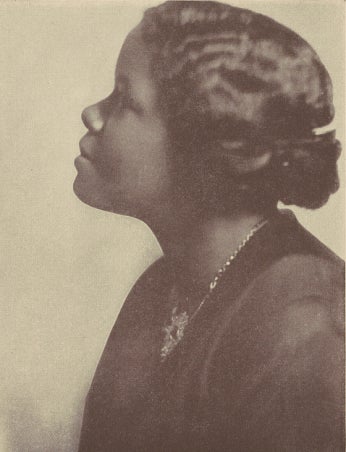
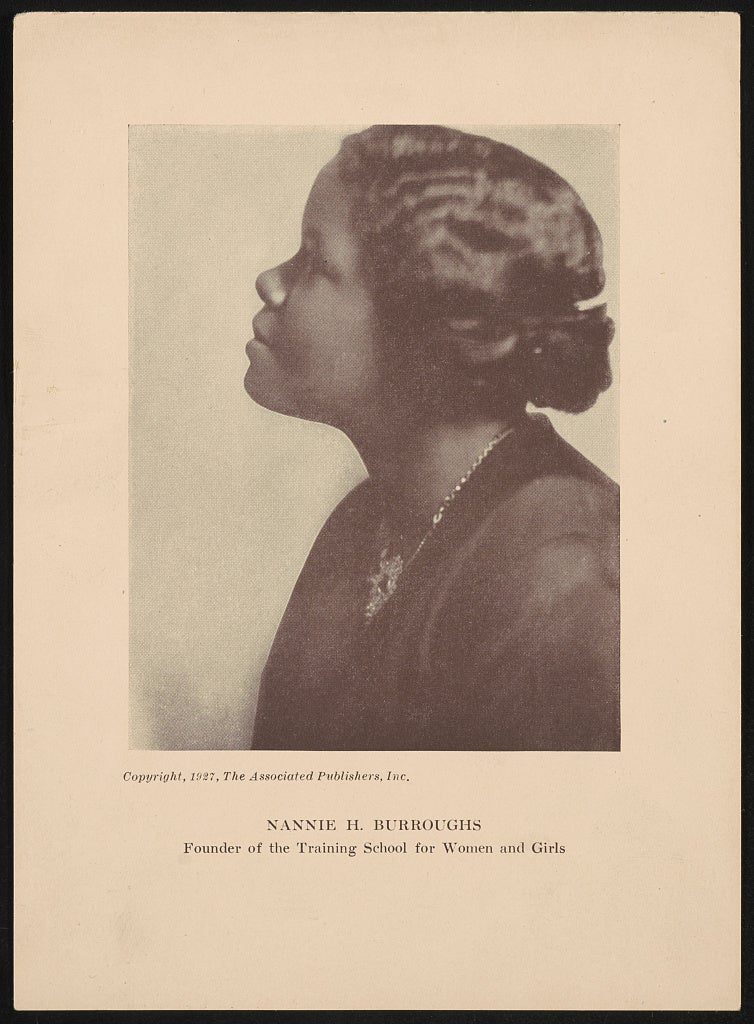
Burroughs was born in Virginia on May 2, 1879, to John and Jennie Burroughs, both previously enslaved. John became a traveling pastor who seldom saw his family. According to scholar Danielle Phillips-Cunningham, Burroughs considered her father “a spoiled child” supported (more or less willingly) by female relatives. 2 Jennie moved to D.C. in 1883 to seek better-paying work for herself and educational opportunities for her daughters.
Raised by her mother and aunt, and with many relatives living in poverty, Burroughs grew up with a keen awareness of the importance of economic independence and labor skills for African American women. She also lived by the 19th Street Baptist Church -- a center for Black political organizing -- which demonstrated the power of collective change to a young Burroughs.
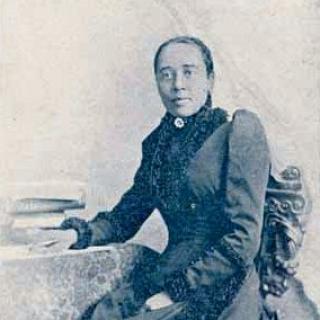
In 1896, Burroughs graduated with honors from M Street High School (later Dunbar), then the top school for African Americans in D.C., studying under leading educators and political activists like Anna Julia Cooper. 3 Her dream had always been to teach, but despite a stellar academic record, she could not find a job in Washington. Burroughs was told she was too young, but the likelier explanation was that she was too poor and her skin too dark. At that time, elite Black Washingtonians exercised significant control over job placements in the African American community including teaching at the best schools. 4 Many had lighter skin and came from wealth, and preferred to hire applicants with similar backgrounds. 5
This experience inspired her to open “a school here in Washington that politics had nothing to do with, and that would give all sorts of girls a fair chance and help them overcome whatever handicaps they might have.” 6 However, with no money and little momentum, Burroughs would have to wait.
The first years of her professional life were difficult and transient: Burroughs edited a Baptist newspaper in Philadelphia, then failed to secure a civil service job in Washington despite acing the exam. Finally, she was offered a job in Kentucky as secretary of the Foreign Mission Board of the National Baptist Convention, then the largest African American organization in America. 7
There, Burroughs developed what would become a lifelong habit of organizing, writing, and advocating for the vulnerable. She confronted the patriarchal hierarchy of the Baptist church -- and angered many male clergy -- when she pointed out that women did most of the fundraising but had no power within the Convention to decide how money would be spent. 8
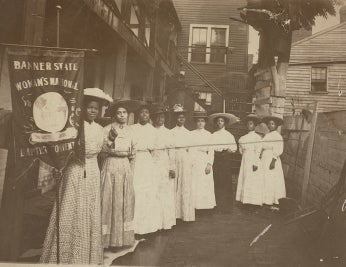
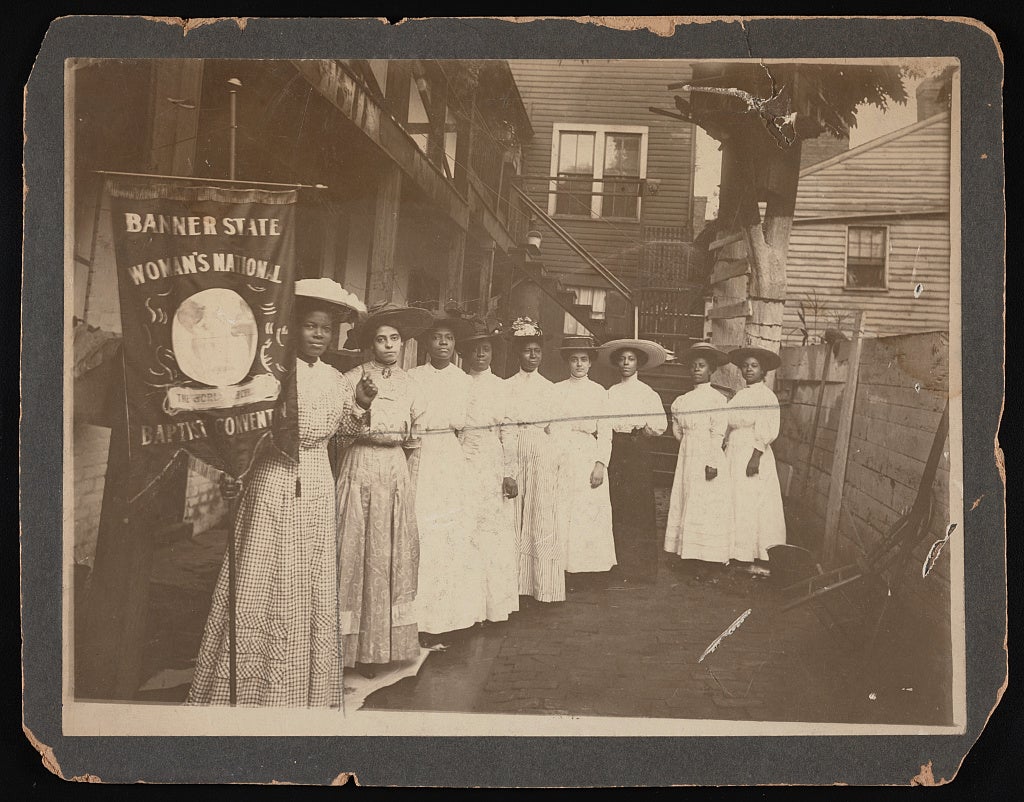
A speech in 1900 to the Baptist Convention sparked her first fame as an activist. Titled How the Sisters are Hindered from Helping, Burroughs implored the male leadership of the Baptist Convention to accept and support women’s organizing: “We come not to usurp thrones nor to sow discord, but to so organize and systematize.” 9
In her ordered and systematic way, Burroughs campaigned to establish her girls’ school. Her first attempt at a committee collapsed and the Baptist National Convention, whom she asked to take on most of the costs, was skeptical on questions of ownership and funding. 10
The obstacles to a girls’ school in Washington were steep. Many early Black institutions were founded by white philanthropists or elite African Americans. Burroughs did not want to rely on either; she spent years collecting small donations from working-class families. 11 A confidant warned her that Washington was not a good setting for a Black girls’ school: “This is a City of Comparisons, and you school, without large funds will not stand the comparison.” 12 Booker T. Washington opposed the school so much that he placed a competing bid on the land for the campus. 13
Much of the resistance stemmed from Burrough’s mission for the school. At a time when few schools for African American girls existed and the jobs available to women were extremely limited, Burroughs wanted to build a trade school that would prepare its students academically, morally, and technically to pursue any number of occupations. But because the largest employment sector for Black women was domestic service, she especially wanted her graduates to achieve excellence there: she sought to professionalize domestic work and, as scholar Elizabeth Brooks Higgenbotham notes “re-define and re-present black women's work identities as skilled workers rather than incompetent menials.” 14
“Since we must serve,” Burroughs declared, “let us serve well, and retain the places we have long held in the best homes in the land.” 15
To some men, the National Trade School threatened their traditional role as breadwinners by preparing women for professional work. Others accused Burroughs of creating a school for servants. But as one 1924 editorial retorted: “Nannie Burroughs does not prepare girls for servants, but for service.” 16
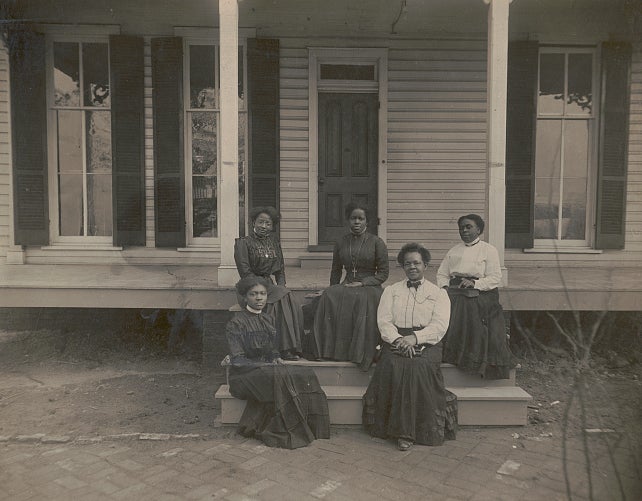
Finally, the National Baptist Convention supplied most of the money for buildings and land, and Nannie Helen Burroughs opened the National Trade School at only 26 years old. The first building was little more than a small farmhouse on six acres of land. Every teacher was a woman and a college graduate. Her first class of high school girls numbered only 31.
Within her lifetime, the student body would grow to more than 2,000.
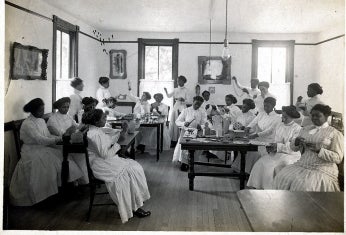
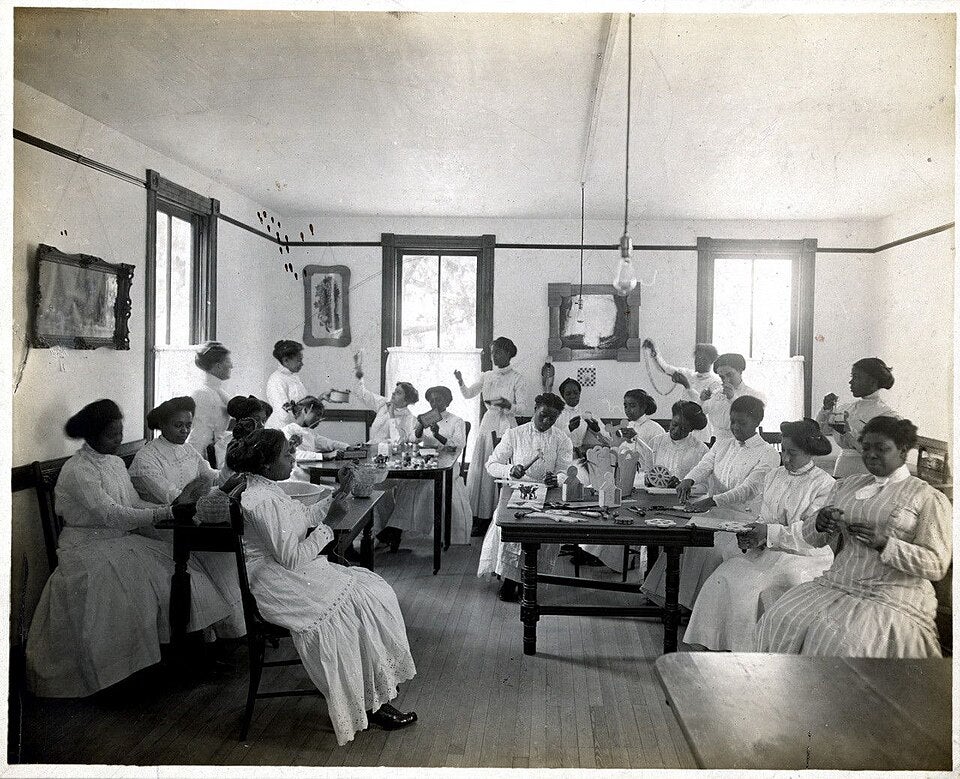
At the National Trade School, female students would develop personally, morally, physically, and intellectually. Burroughs ascribed to the philosophies of “racial uplift” and “self-help,” and wanted to develop women who would be leaders and role models, confident in their skills and helpful to their communities.
The curriculum emphasized practical experiences that would train students in a range of jobs to achieve dependable employment and job stability.. 17 Vocational courses corresponded with the main African American occupations of the time: barbers, manicurists, housekeepers, nurses, and most importantly, domestic services.
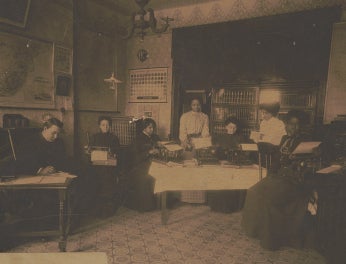
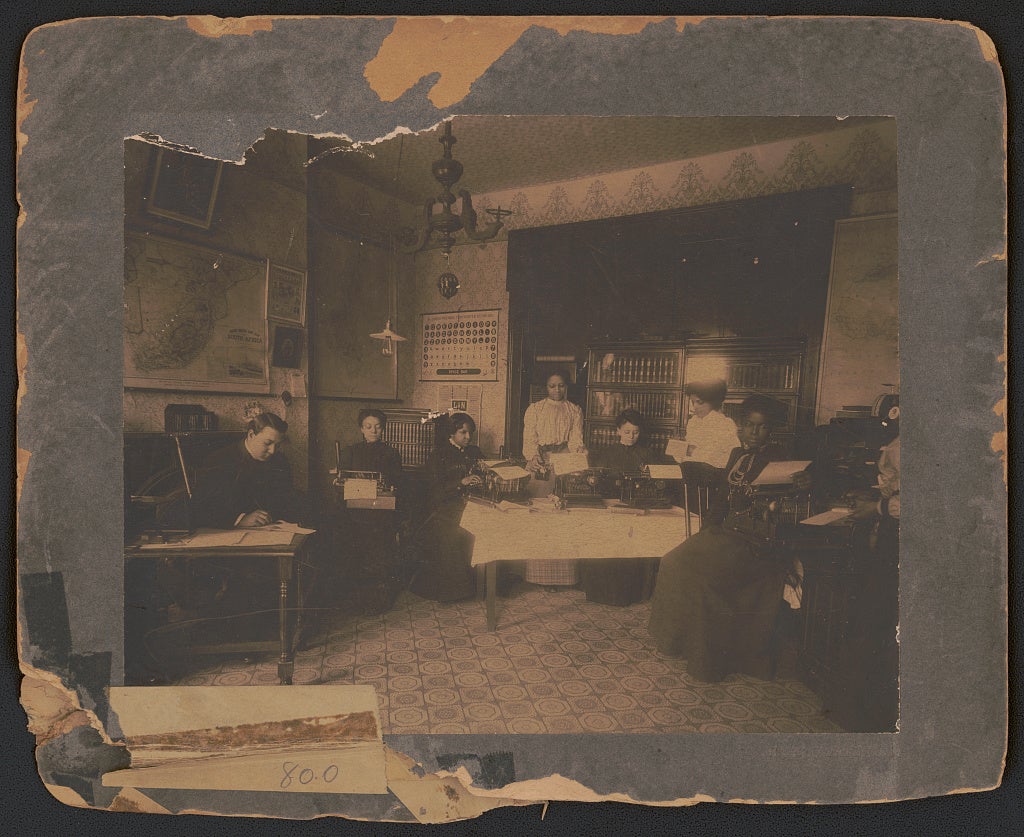
But Burroughs also introduced classes that had nothing to do with housework. Students in the domestic science program studied advanced mathematics, history, Latin, public speaking, typewriting, and foreign languages. 18 She trained her students in fields that Black women were almost totally excluded from, like printing, laundry, and stenography.
Burroughs also imbued her school with her belief in “racial pride,” maintaining that to achieve racial justice, students first needed to take pride in their community, culture, and heritage. 19 To that end, she created a Department of Negro History with a mandatory course that celebrated African Americans' achievements and contributions throughout history. 20 She also spoke out against practices of hair straightening, skin whitening, and the association of lighter skin with morality or good character. 21
As the school’s reputation grew, so did its footprint. The Trades Hall, now a National Historic Landmark, added 12 classrooms and a print shop in 1928. Although most students were working-class, Burrough’s offered no scholarships. The National Trade School’s motto was, “Work. Support thyself. To thine own powers appeal.” 22
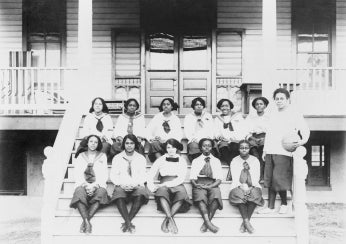
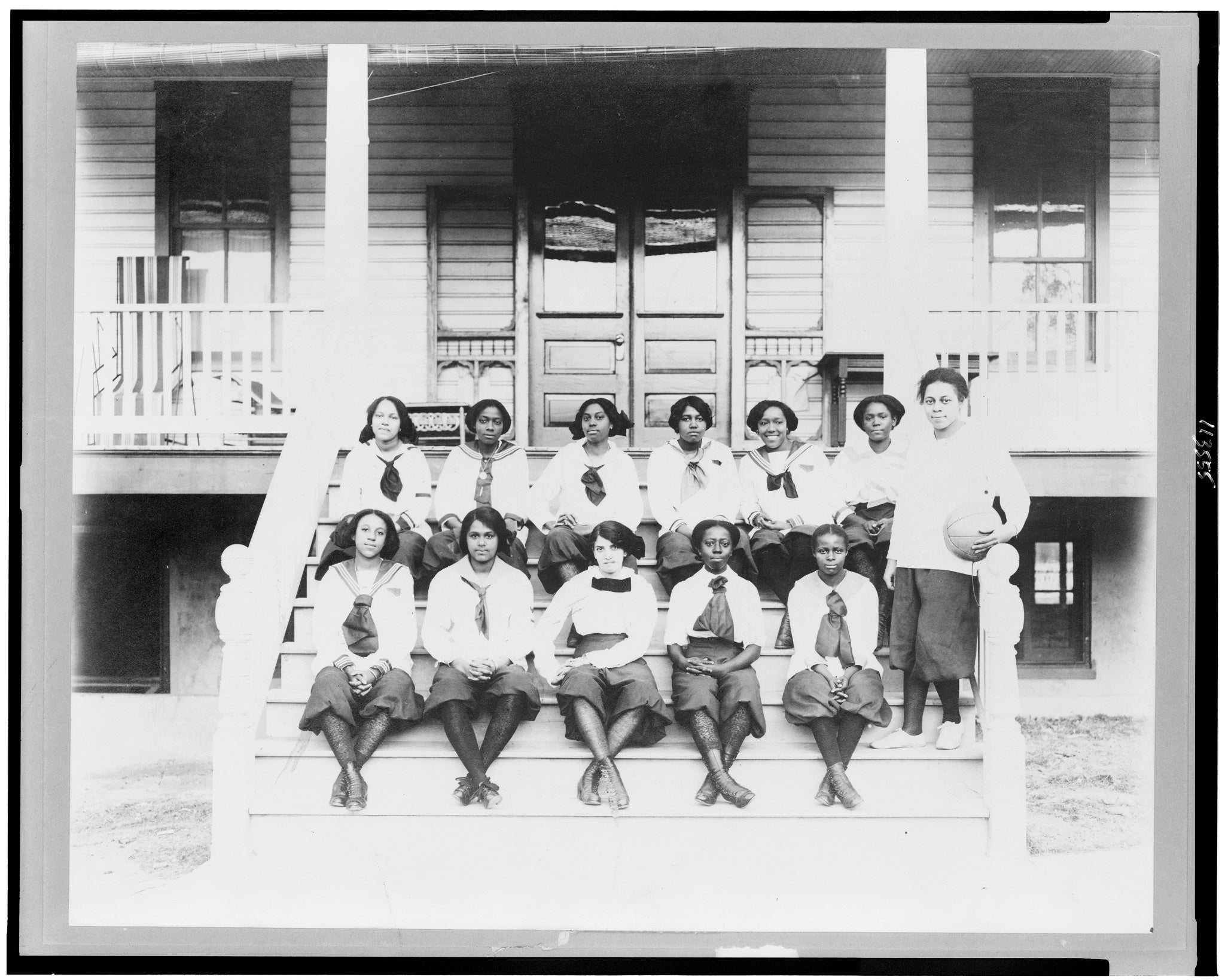
This philosophy was deeply rooted in Burrough’s Baptist faith. She believed that God had called her to open a school and she was also responsible for molding the moral character of her students. As historian Sharon Harley notes, African American women were already stereotyped as “incompetent, lazy, and immoral,” and Burroughs sought to combat those racist characterizations. 23 In her writings and speeches, Burroughs invoked the theme of moral self-improvement and good conduct: “We must make noble living contagious,” she wrote in 1942. 24
The Trade School was meant to liberate women from "ignorance, dirt, immorality, slovenliness, and domination by men" by giving them the keys to economic independence and upstanding characters. 25 Like many other Baptist women, Burroughs appended religious significance to all labor, teaching women to respect themselves as workers with skills and dignity, deserving of fair treatment and pay.
Students learned -- in historian Sharon Harley's words -- that there was “no job too small or menial to perform efficiently or professionally,” either at work or in the home. 26 Even in a working-class household, Burroughs believed, the tablecloth should “be as white as that used in the Executive Mansion” and the tin plates “as clean and shining as the finest china.” 27
According to a scholar who met her as a child, Burroughs “tolerated no excuses and did not believe black people should make any.” 28 If her students did “ordinary things in an extraordinary way” they would find work—and many did. But Burroughs also demanded fairness from employers, saying “first-class help must have first-class treatment.” 29
Under supervision of Burroughs and her teachers, graduates of the National Trade School became “keen of vision, alert in action, modest in deportment, deft of hand, and industrious in life.” 30 In her commitment to serving the working class, Burroughs offered her students financial independence, and the opportunity to declare their dignity as “proud wage earners” by supporting their families, churches, and communities. 31
All these achievements, made while struggling against racism, poverty, and sexism, would be a positive reflection on Black women and African Americans in general. 32
Burroughs remained principal of the school until the end of her life, into which she crammed an impressive amount of political organizing. She served on numerous boards and held executive positions for years at a time. Among her affiliations, she worked with the Frederick Douglass Memorial and Historical Association and the National League of Colored Women, and helped found the Baptist Convention’s Women’s Auxiliary, the National Association of Wage Earners, and Cooperative Industries, D.C. 33 Firmly believing in the power of literature to inspire change, she wrote prodigiously, authoring plays and establishing the first labor periodical owned by an African American woman. 34
She was also appointed by President Hoover to chair a committee on improvements for housing for African Americans. Studying the ravages of the Great Depression, Burroughs “produced the first federal report that made it abundantly clear that black people’s housing conditions were intricately tied to under-resourced schools and hospitals, redlining, and unequal pay.” 35
All her activism even earned her scrutiny from the FBI. Director J. Edgar Hoover called her “one of the most dangerous Black women in America" for her organizing prowess in the fight against racial, class, and gender disparities. 36
Burroughs remained highly active in D.C.’s African American community for the rest of her life, until she died on May 20, 1961. She had shepherded her school and thousands of students through the twentieth century, from the aftermath of Reconstruction almost until the passage of the landmark Civil Rights Act of 1964. Her graduates resided in every state and several countries, the versatility of their training equipping them for jobs from secretary to insurance agent to social worker. For more than six decades, she had worked tirelessly to improve the lives of her neighbors, students, and community.
In a 1927 essay in The Southern Workman, Burroughs implored African Americans to recognize their inherent dignity and to “glorify” themselves by moral conduct and intellectual and spiritual self-improvement. She ended this essay, called With All Thy Getting, by paraphrasing the Book of Wisdom, suggesting the following as a “timely sermon [for] the entire race.” 37
It might also be the most succinct summary of herself: a complex political force, a compassionate activist and stern instructor, a deeply religious, tirelessly active, righteously demanding woman. In brief, Nannie Helen Burroughs asked her community to join her in her life’s work:
“Get education—but with all your getting—get common sense.
Get clothes—but with all your getting—get clean.
Get houses—but with all your getting—get homes.
Get stores—but with all your getting—get standards.
Get your rights—but with all your getting—get right.” 38
Footnotes
- 1
Taylor, Traki L. “‘Womanhood Glorified’: Nannie Helen Burroughs and the National Training School for Women and Girls, Inc., 1909-1961.” The Journal of African American History 87 (2002), 396. https://doi.org/10.2307/1562472
- 2
Danielle Phillips-Cunningham, "DC Mondays: Nannie Helen Burroughs," (online lecture, The George Washington University Museum, Washington, D.C., May 5, 2025). https://evolutiondc.museum.gwu.edu/nannie-helen-burroughs-in-washington/ at 10:28.
- 3
Taylor, 391.
- 4
Taylor, 392.
- 5
Even renowned activist Mary Church Terrell was accused of this kind of favoritism, choosing “’society women’… over more deserving applicants.” See: Taylor, 392.
- 6
Harley, Sharon, “Nannie Helen Burroughs: ‘The Black Goddess of Liberty.’” The Journal of Negro History 81, no. 1/4 (1996), 64. http://www.jstor.org/stable/2717608. Quoting L.H. Hammond, In the Vanguard of a Race (New York: Council of Women for Home Missions and Missionary Education Movement of the United States and Canada, 1922), 48.
- 7
Coker, Kathryn. “AFRICAN AMERICAN EDUCATOR AND ACTIVIST: NANNIE HELEN BURROUGHS.” Richmond Public Library, March 19, 2021. https://rvalibrary.org/shelf-respect/african-american-educator-and-activist-nannie-helen-burroughs/.
- 8
Danielle Phillips-Cunningham, "DC Mondays: Nannie Helen Burroughs," (online lecture, The George Washington University Museum, Washington, D.C., May 5, 2025). https://evolutiondc.museum.gwu.edu/nannie-helen-burroughs-in-washington/ at 15:21.
- 9
Burroughs, Nannie Helen, "How the Sisters are Hindered from Helping," Sept. 13, 1900, Archives of Women’s Political Communication, https://awpc.cattcenter.iastate.edu/communication/how-sisters-are-hindered-helping
- 10
Taylor, 393.
- 11
Terrell, Ellen. “Nannie Helen Burroughs and Her ‘Most Creditable Work.’” The Library of Congress, January 26, 2023. https://blogs.loc.gov/inside_adams/2023/01/nannie-helen-burroughs/.
- 12
Taylor, 394. Quoting Williams Pickens, Nannie Burroughs and the School of the Three B's (New York, 1921), 6.
- 13
Burroughs scrambled for money to outbid him; she got it from Maggie Lena Walker, the first woman to own a bank in the US.
See: Danielle Phillips-Cunningham, "DC Mondays: Nannie Helen Burroughs," (online lecture, The George Washington University Museum, Washington, D.C., May 5, 2025). https://evolutiondc.museum.gwu.edu/nannie-helen-burroughs-in-washington/ at 19:28. - 14
Harley, 64. Quoting Evelyn Brooks Higginbotham, Righteous Discontent: The Women’s Movement in the Black Baptist Church, 1880–1920 (Cambridge, MA: Harvard University Press, 1993).
- 15
Taylor, 397. Quoting L.H. Hammond, In the Vanguard of a Race (New York: Council of Women for Home Missions and Missionary Education Movement of the United States and Canada, 1922).
- 16
Taylor, 397. Quoting Editorial, 21 August 1924 (no newspaper listed), box 318, Nannie Helen Burroughs papers, Manuscript Collection, Library of Congress.
- 17
Taylor, 397.
- 18
Burclaff, Natalie. “Honoring African Americans: Historic Women Trailblazers and Advocacy Organizations.” The Library of Congress, March 11, 2021. https://blogs.loc.gov/inside_adams/2021/03/historic-women-trailblazers/?loclr=blogadm.
- 19
Harley, 67-68.
- 20
Harley, 68.
- 21
Harley, 67.
- 22
Harley, 65.
- 23
Harley, 65.
- 24
Nannie Helen Burroughs, “There is Nobody Home,” c.1942. Reprinted by Archives of Women’s Political Communication, https://awpc.cattcenter.iastate.edu/communication/there-nobody-home
- 25
Taylor, 400. Quoting L.H. Hammond, In the Vanguard of a Race (New York: Council of Women for Home Missions and Missionary Education Movement of the United States and Canada, 1922), 16.
- 26
Harley, 65.
- 27
Harley, 65. Quoting National Baptist Committee, Ninth Annual Session of the WC, 1909, p. 286 from Higginbothom, Righteous Discontent, p. 213.
- 28
Genna Rae McNeil. “AFRICAN AMERICAN CHURCH WOMEN, SOCIAL ACTIVISM, AND THE CRIMINAL JUSTICE SYSTEM.” The Journal of African American History 96, no. 3 (2011): 370–83. https://doi.org/10.5323/jafriamerhist.96.3.0370.
- 29
Harley, 65. Quoting National Baptist Committee, Eleventh Annual Session of the WC, 1911, p. 47 and cf 98 from Higginbothom, Righteous Discontent, p. 213.
- 30
Taylor, 394. Quoting "Circular of Information for the Seventeenth Annual Session of the National Training School For Women and Girls Incorporated, 1925-1926," box 310, p. 13, NHB Papers, Manuscript Division, Library of Congress.
- 31
Smithsonian American Art Museum. “Fighters for Freedom” Across the Smithsonian: Nannie Helen Burroughs’s Cash Register. 2024. https://www.youtube.com/watch?v=5LjyatYJ5y0.
- 32
Harley, 65.
- 33
Burclaff, Natalie. “Honoring African Americans: Historic Women Trailblazers and Advocacy Organizations.” The Library of Congress, March 11, 2021. https://blogs.loc.gov/inside_adams/2021/03/historic-women-trailblazers/?loclr=blogadm.
- 34
Danielle Phillips-Cunningham, "DC Mondays: Nannie Helen Burroughs," (online lecture, The George Washington University Museum, Washington, D.C., May 5, 2025). https://evolutiondc.museum.gwu.edu/nannie-helen-burroughs-in-washington/ at 38:03.
- 35
Danielle Phillips-Cunningham, "DC Mondays: Nannie Helen Burroughs," (online lecture, The George Washington University Museum, Washington, D.C., May 5, 2025). https://evolutiondc.museum.gwu.edu/nannie-helen-burroughs-in-washington/ at 33:40.
- 36
Danielle Phillips-Cunningham, "DC Mondays: Nannie Helen Burroughs," (online lecture, The George Washington University Museum, Washington, D.C., May 5, 2025). https://evolutiondc.museum.gwu.edu/nannie-helen-burroughs-in-washington/ at 04:58.
- 37
Nannie Helen Burroughs "With All Thy Getting," 1927 Southern Workman 56(7): 299-301. Reprinted by Archives of Women’s Political Communication, https://awpc.cattcenter.iastate.edu/communication/all-thy-getting.
- 38
Nannie Helen Burroughs "With All Thy Getting," 1927 Southern Workman 56(7): 299-301. Reprinted by Archives of Women’s Political Communication, https://awpc.cattcenter.iastate.edu/communication/all-thy-getting.
![Sketch of the mythical fuan by Pearson Scott Foresman. [Source: Wikipedia]](/sites/default/files/styles/crop_320x320/public/2023-10/Goatman_Wikipedia_Faun_2_%28PSF%29.png?h=64a074ff&itok=C9Qh-PE1)