There was a period, from the late 1940s until the early 1960s, when Washington, D.C. was a veritable Nashville on the Potomac, a mecca that provided country performers a chance to get their records played, and to perform before big audiences. The man who was most responsible for the District's country preeminence was a charismatic impresario who originally hailed from Lizard Lick, N.C. named Connie Barriot Gay.
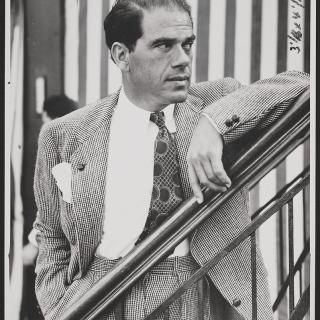
Director Frank Capra's classic 1939 film, Mr. Smith Goes to Washington, a comedy-drama about an ordinary citizen who ascends to the U.S. Senate, today is widely regarded as an uplifting, if overly sentimental, tribute to the egalitarianism at the heart of American-style democracy. But when it was released, it seemed utterly scandalous to legislators of the day, who vehemently denounced the film and sought to punish Hollywood for daring to make it.
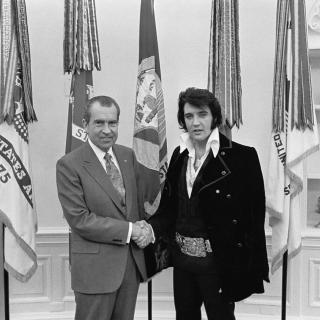
Elvis Presley made headlines when he showed up at the White House unannounced and offered his services to President Nixon to fight the war on drugs in 1970. It was an odd event, which led to an even odder photo. But the Elvis-Nixon meeting was memorable for another reason: It was one of only four public appearances that Elvis made in the Washington, D.C. area.
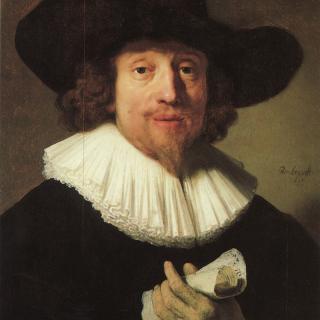
In 1959 a bungled art theft at Washington's Corcoran Gallery of Art left a rare Rembrandt slashed and hurriedly restored, revealing as much mystery about the painting’s past as about the unknown thief who tried to steal it.
On March 10, 1977, twelve armed Hanafi militants seized three Washington buildings and nearly 150 hostages to protest against the release of the film, Mohammed, Messenger of God and law enforcement's investigation into the murders of seven Hanafis four years earlier. The standoff that followed reverberated for years.
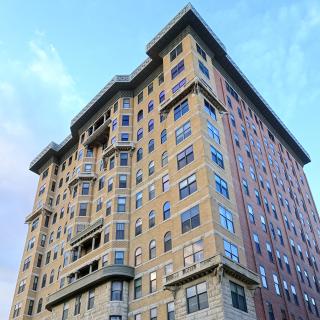
When architect Thomas Franklin Schneider built a 12-story building called The Cairo in 1894, it dazzled and infuriated Washington—so much that neighbors and Congress moved to ban skyscrapers, forever changing the city’s skyline.
One of the big challenges to writing a history blog is finding good images. Well, things just got a lot easier with Getty's announcement that it is making up to 35 million images available for bloggers to embed in their sites for free. The company has created a new embed tool that allows images to be shared and includes proper photo credit information.
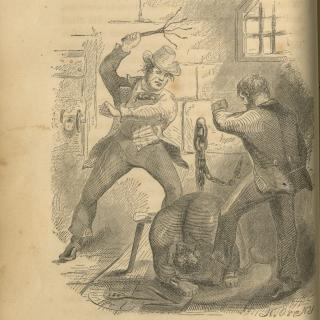
Director Steve McQueen's Oscar-winning film, 12 Years a Slave, serves to highlight a horrific and shameful part of local history — the area's role as a transit depot and resale market for humans held in involuntary servitude. The acclaimed film tells the true story of Solomon Northup, a free African-American violinist who in 1841 traveled from his home in New York to Washington, DC, with the promise of a high-paying job as a circus musician. He didn't know that his prospective employers actually were slave traders.
In 1978, the FBI rented a swank rowhouse at 4407 W Street NW as the covert base for the Abscam sting operation in which a U.S. Senator, six members of the U.S. House, and assorted other local and state-level politicians in New Jersey were convicted of accepting bribes from a fictitious favor-seeking Middle Eastern sheik. The operation later inspired the film American Hustle.
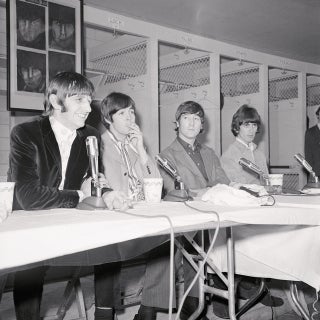
In February 1964, the Beatles made their first visit to the United States, appearing on The Ed Sullivan Show before making their way down to Washington, D.C. for their first public concert at the Washington Coliseum on 3rd St. NE. To celebrate the 50th anniversary, the D.C. Preservation League and Douglas Development and recreated that historic show at the Washington Coliseum. Who says you can't turn back time?
Valentine’s Days were unusually eventful for Theodore Roosevelt and family, as this date marked some of the happiest and darkest periods in their lives.
After their first American concert at the Washington Coliseum on February 11, 1964, the Beatles rushed to a British Embassy charity ball. There, they found chaos — snatched hair, desperate autograph seekers, and a night they would never forget.


![Sketch of the mythical fuan by Pearson Scott Foresman. [Source: Wikipedia]](/sites/default/files/styles/crop_320x320/public/2023-10/Goatman_Wikipedia_Faun_2_%28PSF%29.png?h=64a074ff&itok=C9Qh-PE1)


![Ben's Chili Bowl, 1980 (Photo Source: Library of Congress) Highsmith, Carol M, photographer. Ben's Chili Bowl, Washington, D.C. United States Washington D.C, None. [Between 1980 and 2006] Photograph. Retrieved from the Library of Congress, https://www.loc.gov/item/2011635251/. (Accessed December 04, 2017.)](/sites/default/files/styles/crop_320x320/public/17058v.jpg?itok=egZM-IR9 "Ben's Chili Bowl, 1980 (Photo Source: Library of Congress) Highsmith, Carol M, photographer. Ben's Chili Bowl, Washington, D.C. United States Washington D.C, None. [Between 1980 and 2006] Photograph. Retrieved from the Library of Congress, https://www.loc.gov/item/2011635251/. (Accessed December 04, 2017.)")