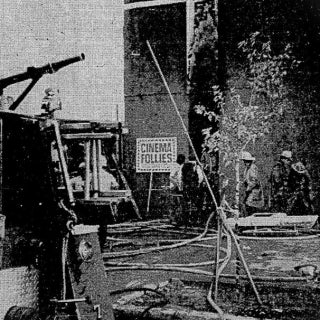
In the fall of 1977, a fire broke out at the Cinema Follies film club in Southeast Washington. The men upstairs found their only escape padlocked shut. The disaster forced Washington to confront the risks its gay community faced, and who that community really was.
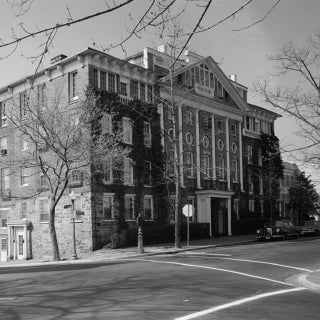
Explore the remarkable, haunted history of one of Georgetown’s most mysterious mansions, Halcyon House. Albert Clemons believed he could cheat death by never finishing his house. For nearly four decades, the eccentric antique collector filled the Georgetown home with staircases to nowhere, doors opening onto blank walls, and a hidden two-story theater, which archaeological evidence now suggests may have hosted a queer theater scene in early 20th-century D.C. Today, visitors still report strange lights and ghostly figures, and past residents swore they heard odd noises in the false passageways.
As a closeted lesbian in the 1960s, emotions of isolation, grief, and depression nearly drove Lilli Vincenz to suicide in her early twenties. But after being outed by a roommate and joining a gay rights organization, Vincenz worked tirelessly to prevent other gay, bisexual, and questioning women from feeling the same shame and loneliness. Key to her efforts (and beloved by its attendees) was the Gay Women's Open House, which operated out of her home for nearly a decade. This safe, nonjudgemental space to gather, converse, and laugh could be life-changing for its attendees.
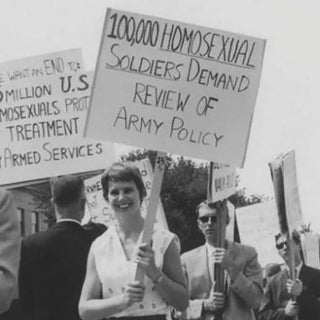
The “Lavender Scare” forced thousands of gay and lesbian federal employees from their jobs in the late 1940s through the 1960s. But in Washington, the Mattachine Society fought back.
During the AIDS crisis of the 1980s, The ClubHouse and other LGBTQ+ nightclubs in DC provided a space for political activism and social support for the gay Black community.
Though the AIDS epidemic had been raging for nearly a decade, by 1988, the FDA had only cleared a single drug to treat it. Frustrated with what they considered a deadly lack of initiative, AIDS patients, community activists, friends, and family marched to the FDA's headquarters in Rockville to demand more treatments, more urgency, and more understanding.
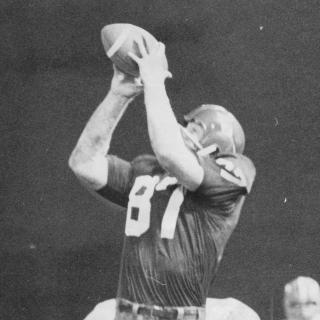
Jerry Smith was a record setting tight end for the (then) Washington Redskins from 1965 - 1977. In 1986, Smith also became the first professional athlete to announce he was suffering from acquired immunodeficiency syndrome, better known as AIDS. Smith’s decision to reveal his diagnosis did not come easy, nor did being a closeted gay player in an era when opening up about one’s sexuality could risk losing everything.
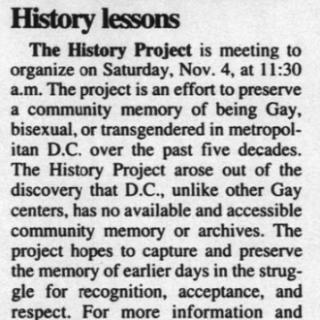
In the fall of 2000, D.C. resident Mark Meinke was working on a book about drag performers when he ran into a huge roadblock: there were no archives covering the history of his research subject or the District’s large and vibrant LGBTQIA+ community. “D.C., unlike other Gay centers, has no available and accessible community memory or archives,” he wrote in the Washington Blade. So, he did something about it.
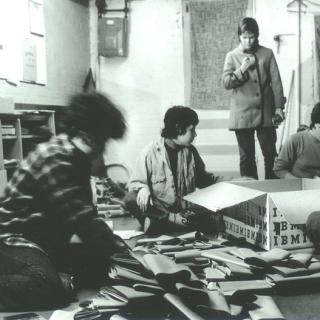
In 1971, twelve women moved into a house on Capitol Hill, becoming the first serious lesbian collective in America. Contentious from the start and lasting only a year and a half, these Furies (as they called themselves) nonetheless incited a reckoning within the feminist movement, with thought and theory that is still being discussed today.
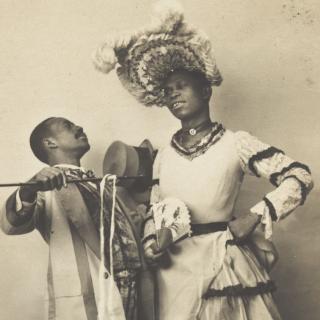
Today, Washington has a lively drag scene, from brunches to balls. But the roots of that culture extend past Stonewall. In the 1880s, a freed slave named William Dorsey Swann crowned himself the first drag "queen" at gatherings in and around the Dupont Circle neighborhood.